

LexDellmeier in the past eight months has developed and now launched "BenBot" – version 1.0 – a chatbot who assists in answering questions relating to EU trademark applications. Special features include an identical search, automatic classification of goods and services and overall costs. Find BenBot on the landing page of the website www.lexdellmeier.com.
Want to know more about BenBot. Here are some Q's and A's in a nutshell:
[[{"type":"media","fid":"5324","view_mode":"default","instance_fields":"override"}]]
Q: What can BenBot assist with?
A: BenBot helps answer basic questions relating to EU trademarks. You can enter your trademark, BenBot asks what products or services you wish to protect and automatically classifies them. And, BenBot can do an identical search for word marks. In addition, the costs relating to an EU trademark application are calculated.
Q: Does the use of BenBot cost anything?
A: No. BenBot is free of cost and available 24/7. Therefore, the chatbot is great for start-ups or international clients who are in different time zones and want to get a quick and easy overview about EU trademark applications.
Q: Does BenBot file an EU application?
A: No. BenBot helps answer the user's questions, records the user's answers and informs the LexDellmeier trademark team about the user's inquiry automatically through BenBot. What LexDellmeier has created is the version 1.0 of a chatbot for EU trademarks. It was the aim to create a simple tool to help answer questions relating to the EU trademark application process. The chatbot user does not need to have any prior knowledge about EU trademarks. He just needs to answer the questions BenBot asks - quick and simple in approx. 8 - 10 minutes.
Q: What happens after the user has submitted everything through BenBot?
A: The LexDellmeier team reverts to the user - usually within 24 - 48 h in order to maybe discuss some further aspects of the application that BenBot himself cannot assess yet. For example: It is possible to upload word marks, word/device marks and pure device marks. However, it could be that the potential trademark includes elements which in general cannot be protected as a trademark according to applicable EU case law. BenBot version 1.0 cannot legally (yet) assess the application. For this reason, the LexDellmeier trademark team reviews the given information and contacts the user in order to further assist or discuss the EU trademark application in further detail.
Q: Where does the name "BenBot" come from?
A: "Ben" is the name of LexDellmeier’s office dog - a funny and always in a good mood rough-haired dachshund, who everyone at the office loves.
PS: Of course, “BenBot” is protected as a trademark.
Q: Who had the idea for BenBot and who developed the chatbot?
A: The idea came from Alexandra (Dellmeier). Project leader was LexDellmeier's fantastic summer law intern in 2020 and ELSA law student, Oliwia Puto. Oliwia, with some guidance from Alexandra, developed the whole project plan internally and externally for the (software) developer, set up the time plan, wrote the texts for the chatbot, wrote the terms and conditions and also did the final testing. For more information on Oliwia's tasks during her 3-month internship at LexDellmeier – please see her blog post at: https://www.lexdellmeier.com/de/node/1604Feel free to try out BenBot, recommend him to #startups and please do give us feedback. It is our aim to continue to develop him over the next years to become even more sophisticated, smarter and fun.
After almost 10 years, the dispute over the PIRELLI figurative trademark comes to an end with a ruling by the European Court of Justice (ECJ) on 3 June 2021. The European General Court (EGC) previously ruled that the sign is protectable as a trademark because it does not depict a technical effect of the protected product. This ruling has now been confirmed by the ECJ.

(EUTM No. 002319176; Owner: PIRELLI TYRE S.p.A.)
I. Background of the case
On 23 July 2001, PIRELLI TYRE S.p.A., filed an application with the European Union Intellectual Property Office (EUIPO) for an EU trademark for the figurative sign shown above. This sign was subsequently registered as a Community trademark (now called European Trademark) on 18 October 2002.
On 27 September 2012, The Yokohama Rubber Co. Ltd. filed an application with the EUIPO for a declaration of invalidity of the disputed mark for the goods "tires, solid tires, semi-pneumatic tires and pneumatic tires for vehicle wheels of all kinds” in Class 12. As a result, the Cancellation Division of the EUIPO declared those goods of the disputed mark and, in addition, the goods "rims and covers for vehicle wheels of all kinds", to be invalid.
On appeal by PIRELLI TYRE S.p.A., the Board of Appeal (BoA) partially annulled the decision, but, upheld the invalidity of the disputed mark for "tires, solid, semi-pneumatic and pneumatic tires for vehicle wheels of all kinds”. The proceedings ended up before the EGC, since PIRELLI TYRE S.p.A. took the legal view that a ground for invalidity according to Art. 7 (1) (e) of Regulation (EC) 40/94 did not exist. The EGC shared this opinion and annulled the declaration of nullity.
On 03 June 2021, the ECJ ruled on the appeals under Art. 256 (1) TFEU and Art. 58 (1) of the Statute of the Court of Justice of the European Union of EUIPO and Yokohama Rubber Co. Ltd. in joint proceedings.
II. Decision of the ECJ
First, Yokohama Rubber Co Ltd raised the complaint of adulteration. However, this was rejected by the ECJ as inadmissible, since it was not specified exactly which errors of assessment the EGC had made in its view that led to a distortion of the facts.
Further, the ECJ points out that the appeal is limited to points of law. Thus, the objections raised by the complainants regarding the evaluation of evidence and the assessment of facts in the challenged judgment of the EGC were also rejected as inadmissible, since they do not concern points of law. The ECJ also rejected the allegation that the GCJ's judgment was inconsistent by referring to the overall consideration of the judgment.
It was also criticized that the EGC assumed that the EUIPO had to add further information for the assessment of a technical function of the representation and thus unlawfully added elements to the disputed mark. It was considered that the sign represents a groove and thus a component of the tread, which in turn is only a component of a tire. Here, the ECJ clarifies that the court judicially assumed that the EUIPO could include further material in its assessment if it did not consider the disputed mark as "representing a tire tread".
Furthermore, the decision raised the question of how the absolute ground for refusal in Art. 7 (1) (e) (ii) of Regulation No 40/94 must be interpreted. The EGC assumed that only signs that constitute an essential part of the goods in quantitative and qualitative terms can achieve a technical effect. However, according to the ECJ, the review of this assessment could be left undecided, since already no evidence was provided that a single groove in the disputed form is at all suitable to achieve a technical effect.
Lastly, the ECJ ruled that there was no error of law in finding that the registration of the disputed mark was not capable of preventing Pirelli's competitors from marketing tires having a shape identical or like the shape of that mark when that shape is combined with other elements.
III. Conclusion
This presented decision refers to Regulation (EC) 40/94, which has been replaced by Regulation (EU) 2017/1001. However, given the wording of the new regulation, this case law may continue to be relevant. But this remains to be seen.
For more information read the full decision here: https://curia.europa.eu/juris/document/document.jsf?text=&docid=242042&pageIndex=0&doclang=EN&mode=lst&dir=&occ=first&part=1&cid=14087443
I. General aspects relating to 3D/shape marks
The 3D trademark is a figurative trademark in which the three-dimensional design or shape of a trademark is protected. This can be the packaging or shape of a product.
As with other forms of trademarks, it is particularly important that the mark must be distinctive. No prerequisite for 3D trademark protection is – contrary to design law – the novelty and uniqueness of the aesthetic design of a consumer product. If the respective requirements are met, a product design can be protected as a design and at the same time as a three-dimensional trademark, since the respective protection fulfils different functions.
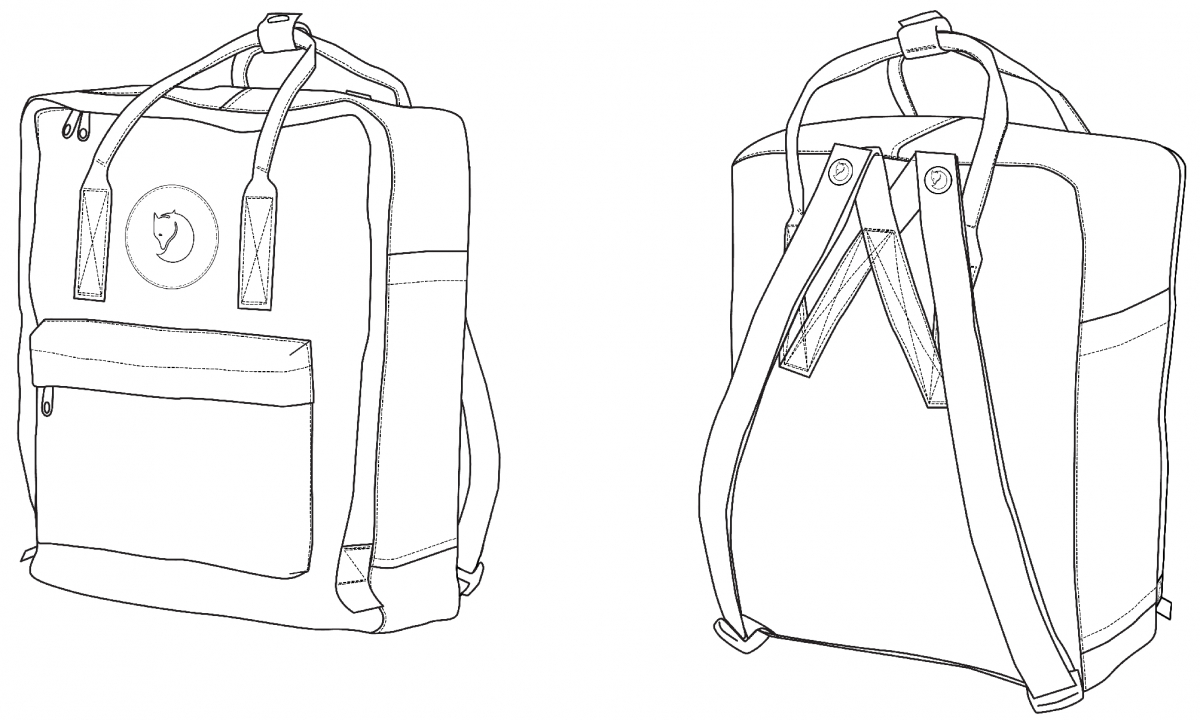
EUTM No. 011711496 owned by Fenix Outdoor AB
Last year in 2020, various European trademark offices agreed on a common practice regarding 3D/shape marks in order to strive for further harmonization of EU decision making.
- If a non-distinctive shape is represented in a specific color, it is necessary for decisiveness that the specific color combination is unusual for the product and characterizes the overall impression.
- If the shape is supplemented by a distinctive word or figurative element, distinctive character can be assumed if this characterizes the overall impression. In the case of very well-known trademarks, even small word and figurative elements are to be regarded as distinctive.
This requirement was also the subject of a new decision of the EUIPO Board of Appeal (BoA) on 21 May 2021, with regard to a backpack shape as a 3D trademark (Case R 1485/2020-1).
II. Background of the case
In 2013, Fenix Outdoor AB applied for the 3D trademark shown above in class 18 for the goods backpacks, which was published and registered.
On 25 January 2019, Gor Factory, S.A. filed an application for a declaration of invalidity and cancellation of the registered trademark for all goods. This was based on Article 59 (1) (a) EUTMR, as they see a violation of Article 7 (1) (a) and (b) EUTMR.
This request was rejected by the Cancellation Division in its decision dated 27 May 2020, against which the applicant filed an appeal. The BoA of the EUIPO decided on this matter on 21 May 2021.
III. Decision of the Board of Appeal of the EUIPO
The appeal is admissible, but unfounded. The Board could not identify a violation of Article 7 (1) (b) EUTMR. The examination of distinctiveness is carried out in various stages. First, it is determined whether the shape as such is devoid of distinctive character, only then other elements are identified and thereupon the distinctive character accruing to them is assessed. Second, the assessment is made in the context of the overall view, which is particularly important in the case of three-dimensional marks consisting of the appearance of the product itself.
- As to the first point, the Board held that the sign consists of the shape of a backpack, which is common and usual overall, so that the shape alone does not give rise to any distinctive character.
- At the next stage of the assessment, the fox logo was included as a figurative element, which was considered distinctive, since this animal has no connection with the protected goods.
Due to the fact that the figurative element (the fox logo) was included in the shape mark, it was found that it is in a central position within the shape and due to its size, it can attract the attention of the consumer. In particular, buyers of backpacks would know that the distinctive sign of those goods is usually on the upper front of the bag, so that attention is drawn to the fox logo and ensures that the mark as a whole is actually perceived as an indication of origin.
The Board also did not find a violation of Article 7 (1) (a) EUTMR. In particular, the applicant has not provided any evidence to the contrary that the requirements of Article 4 EUTMR are not met. Since the mark has already been found to be distinctive and therefore registered, it must necessarily be capable of providing an indication of origin.
It remains to be seen if the BoA decision will be appealed to the European General Court or if it will become final.
When hearing about the „BavariaWeed“ decision of the European General Court (Decision of 12 May 2021, T-178/20 – currently only available in German and French) for the first time, one‘s initial reaction might be to say „I thought we were over that.“ However, when you take a closer look at the reasoning and take into account that the mark had been filed with the European Union Intellectual Property Office (EUIPO), asking for trademark protection in all – back then 28 – EU Member States, it becomes obvious that it is not that easy… And, even if the EUIPO does not want to register the mark – guess what?! The German Patent and Trademark Office did!
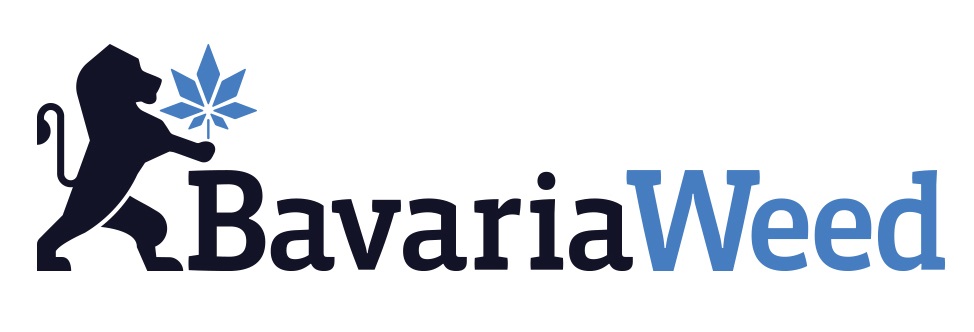
(EUTM Application No. 017997323)
I. Background
In 2018, a recently established distributor of Cannabis products to pharmacies across Germany with a seat in a small town close to Munich filed EU Trademark Application No. 017997323 for the word/device mark „BavariaWeed“ as pictured above. The application designates different services in classes 35, 39, 42 and 44 – all relating to the distribution and promotion of cannabis for medical use.
The EUIPO including the Board of Appeal rejected the application based on Article 7(1)(f) EUTMR for being contrary to public policy.
II. Recent Decision of the European General Court
On 12 May 2021, upon further appeal, the European General Court confirmed the refusal relying on the following reasons (Case T-178/20 – BavariaWeed):
- The relevant, English-speaking public will easily understand the word part "weed" as a slang term referring to "marijuana". Thus, the trademark application would endorse the use of this drug as a lifestyle product for leisure purposes which is detrimental to the public order in individual EU Member States.
- Although legalizing certain uses of cannabis is being discussed on EU-level, the consumption of marijuana is still illegal in some EU Member States, which is sufficient for a refusal under Article 7(1)(f) EUTMR.
- The assessment of a ground for refusal under Article 7(1)(f) EUTMR cannot be limited to the public to which the designated services are directly addressed, in this case doctors, nurses and patients. Instead, it must be considered that the sign applied for will also be seen by other persons who, without being concerned by those services, will encounter the sign incidentally in their day-to-day lives. These persons might not be aware of the official rules on cannabis products for medical use and might perceive the figurative mark „BavariaWeed“ as support for narcotics. Thus, the threshold for refusing a trademark application under Article 7(1)(f) EUTMR should not be set too low.
III. Conclusion
The perception of a trademark application as being contrary to public policy is not the same in all EU Member States, inter alia for linguistic, historic, social and cultural reasons. Therefore, while use of cannabis for medical purposes might have become more liberal over the past years, there are still different standards in the various EU Member States that need to be taken into account during the trademark registration process.
Interestingly, on 30 April 2021, the applicant had also filed German Trademark Application No. 30 2019 214 565 for the same figurative „BavariaWeed“ mark with the German Patent and Trademark Office basically covering the same services not restricted to „cannabis“. This application got registered within less than a month… As you can see, not all trademark related issues have been harmonized throughout the EU member states. Therefore, it is still important to strategize trademark applications and have knowledge of case law – in the EU and around the world.
Should you like to discuss the decision of the European General Court regarding the refusal of the „BavariaWeed“ mark, you are welcome to comment on this article or contact us by email to info@lexdellmeier.com or by phone: +49 89 55 87 98 70.
Terms and Conditions of the Use of the Chatbot “BenBot” - Status: 15 May 2021
Preamble
These Terms and Conditions of the use of the Chatbot “BenBot” (hereinafter: the Chatbot Terms and Conditions) apply to all services offered via the mobile app “BenBot” by LexDellmeier Intellectual Property Law Firm, Nymphenburger Str. 23, 80335 Munich, Germany, Tel: 089 - 55 87 987 0 - Central Email: info@lexdellmeier.com (hereinafter: LexDellmeier) (in particular, but not exclusively: provision of information in the field of European Union trademarks, collection of information necessary to apply for a EU trademark registration).
The Chatbot Terms and Conditions, together with LexDellmeier’s General Terms and Conditions and Data Privacy Notice, constitute the basis of the agreement between LexDellmeier and the user (hereinafter: the Agreement). By accepting the Agreement, you confirm that you have read, understood and accepted its content.
1. General Information
1.1 Service Description
The Chatbot “BenBot” (hereinafter: the Chatbot) is a service provided by LexDellmeier to allow the user to apply for the registration of their EU trademark. The Chatbot generates questions to the user and the user answers them by typing relevant information or uploading relevant files. At the end, the user must confirm whether they want to submit the filled form to LexDellmeier. If they choose to do so, an email with the summary of the information provided in the application form will be sent both to LexDellmeier and the user. Attorneys at LexDellmeier will then contact the user via email or phone within 2 – 3 working days in order to discuss their inquiry.
Filling and submitting the application form to LexDellmeier itself imposes no obligation on LexDellmeier to perform any legal services for the user and no obligation on the user to pay for their performance. Such an obligation only arises if after the consultation via email or phone LexDellmeier and the user agree to it in accordance with the General Terms and Conditions.
1.2 Acceptable Use
The user understands and agrees that they will use the Chatbot only in accordance with the contractual intended purpose and the Agreement. In particular, but without limitation, the user may not:
- Hinder the functioning of the Chatbot, especially in the form of reverse engineering or hacking the Chatbot, attempting to gain unauthorized access to the Chatbot (or any portion thereof), or related systems, networks, or data;
- Use the Chatbot in a way contradictory to the Agreement and causing LexDellmeier to become impaired in its ability to provide services via the Chatbot, e.g. by submitting data or content that may contain viruses or other harmful components;
- Misrepresent or mask the origin of any data, content, or other information they submit, e.g. impersonate anyone else;
- Use the Chatbot in a way which violates the rights of other individuals or laws.
In case of such a breach, LexDellmeier retains the right to exclude the user from using the Chatbot.
2. Exclusion of liability
2.1 Information provided by the Chatbot
LexDellmeier shall have no responsibility or liability whatsoever arising from or connected to the accuracy, reliability, currency or completeness of any material contained on the mobile application “BenBot”. This refers in particular but without limitation to:
- the information displayed by the Chatbot in chat windows as well as in the side bar;
- the result of the identity search performed by the Chatbot.
Neither the information provided by the Chatbot nor the searches can be taken as a professional legal advice or a substitute thereof. LexDellmeier advises the user to exercise their own skill and care with respect to the use of the Chatbot and to obtain any appropriate professional advice relevant to their particular circumstances.
2.2 Data provided by the user
All information, data, graphics, messages or any other materials submitted by the user via the Chatbot (hereinafter: Data) is the property of the user. The user is solely responsible for all Data submitted via the Chatbot. LexDellmeier shall have no responsibility or liability whatsoever arising from or connected to any Data provided by the user via the Chatbot.
2.3 Services performed via the Chatbot
LexDellmeier shall have no responsibility or liability whatsoever arising from or connected to the improper functioning of the Chatbot, in particular but not limited to any technical issues that arise.
3. Intellectual Property
“BENBOT” is a registered trademark and is therefore subject to national, as well as international, protection.
LexDellmeier has rights to intangible assets in the form of a graphic project of offered services and software, application layout, and computer software, as well as to all company signs and trademarks used within its scope of business activity.
4. Cost
The use of the Chatbot itself is free of charge.
If after the consultation via email or phone LexDellmeier and the user decide to enter into a legally binding agreement to perform legal services, the relevant provisions of General Terms and Conditions apply, in particular the provisions regarding the Package “STARTUP” in connection with the online trademark application via the mobile app “BenBot”.
5. Data protection
Personal data received by LexDellmeier from the user are collected, processed, and used by LexDelmeier as described in a separate Data Privacy Notice. For information regarding LexDellmeier’s compliance with the applicable data protection laws, please visit our Data Privacy Notice.
6. Place of jurisdiction
The place of jurisdiction for all disputes arising from the relationship between LexDellmeier and the user is - as far as legally permissible – Munich, Germany.
7. Severability clause
If parts or individual formulations of this text do not, no longer or not completely correspond to the applicable legal situation, the remaining parts of the present Chatbot Terms and Conditions remain unaffected in their content and validity.
On April 21, 2021, the European Commission published a draft bill on dealing with Artificial Intelligence (AI). This is intended to set a global standard for the use of these technologies as the world's first legal framework for AI. If not implemented properly, the EU could be put at an international disadvantage and innovation by SMEs and start-ups could be hampered, or the use of AI could threaten fundamental rights.
Source: Shutterstock; 1204602874
I. Important statements of the EU Commission's draft regulation
The draft is a draft regulation, so that it will be directly applicable in each Member State upon entry into force, without any further act of transposition.
- Who is affected and what exactly is covered by the regulation?
In terms of subject matter, the regulation is intended to apply to AI-systems, the definition of which is very broad. The following is covered and defined: "software developed using one or more of the techniques and approaches listed in an Annex I to the regulation that can produce outputs such as content, predictions, recommendations, or decisions for a human-specified set of predefined goals that affect environments with which they interact". The personal and territorial scope of protection covers providers and users - wherever the AI-application is placed on the market or used.
- What exactly is the legal framework about?
The basic structure of the Commission's draft is “risk-based”. The greater the hazard potential of a particular AI application is, the more requirements and regulations need to be fulfilled. Four categories and "potential hazards" are envisaged, for each of which different rules apply. Unacceptable risk, high risk, limited risk, and minimal risk.
"Real-time" remote biometric identification for law enforcement purposes, as well as any application that manipulates human behaviour to circumvent user free will (e.g. voice assistant toys that entice children to engage in risky behaviour), fall into the category of unacceptable risks and will be prohibited.
The draft focuses primarily on rules for high risk applications. This risk includes the assessment of individuals, such as recruitment or credit assessment tools, as well as the assessment of examinations. Here, the Commission considers that there is a great risk to the health and safety of people or their fundamental rights. Therefore, there are strict requirements in the areas of the quality of the data sets used, technical documentation and record keeping, as well as transparency and provision of information to users, human supervision, and robustness, accuracy, and cybersecurity.
For limited risk AI systems: transparency obligations are imposed on vendors; for minimal risk systems: the systems can be developed in accordance with the law already in place without additional obligations.
II. First Conclusion
In addressing the challenge which the EU faces in creating laws for new technologies, it is operating in a field of tension. Innovation must be encouraged, but also citizens' rights must be respected. It can be considered positive that the EU Commission has recognized the technical developments and the social relevance and is addressing them at this point in time.
As the legislative process still requires the involvement of the European Parliament and the Council of the European Union, it remains to be seen if and what changes the draft regulation on AI will undergo. LexDellmeier will keep you updated on this topic.
For further information click here:
https://ec.europa.eu/commission/presscorner/detail/en/IP_21_1682
On New Types of Trademarks -- EU Common Practice CP11 recently published
Recently, in April 2021, the Intellectual Property Offices of the EU Intellectual Property Network (EUIPN) published a new Common Practice (CP11). It aims at providing guidance regarding the examination of formal requirements and grounds for refusal and/or invalidity of new types of trademarks like sound, motion, multimedia and hologram marks. By publishing this new Common Practice, it is hoped to increase transparency, predictability and legal certainty for both, examiners and users alike.

(For further information on the network see: https://www.tmdn.org/)
CP11 contains quite a bit of information on questions of registrability and invalidation of new types of trademarks and we strongly recommend that you read the Common Practice carefully to get a complete picture. You can find the document with references to instructive examples in different languages at the following link: https://www.tmdn.org/network/converging-practices.
For the purposes of this blog article, we would like to point out some issues regarding the inherent distinctiveness of non-traditional trademarks that we hope you will find relevant for your trademark applications and application strategies:
- When a priority claim involves two trademarks with different subject matter, regardless of their format or the type of trade mark selected, the trademarks will be considered different and consequently, the priority claim will be rejected -- for instance a multimedia mark consisting of a combination of visual and audio elements and a younger sound mark claiming the priority of the earlier multimedia mark.
- Priority claims in which one of the filings is represented in musical notation (for instance as a JPEG) and the other is represented in an audio file (for instance as a MP3), will only be accepted if all the elements contained in the audio file are indicated in the musical notation.
- Priority claims in which one of the filings is represented in a sequence of still images (for instance as a JPEG) and the other in a video file (for instance as a MP4) will only be accepted if all the elements of the video file and their complete movement are clearly identifiable in the sequence of still images. If the second filing is represented in a sequence of still images, a description can be required to ensure that the subject matter is identical (e.g. duration, speed, repetitions).
- Sounds are increasingly being used in trade as part of a branding strategy and consumers are more likely to perceive them as indications of commercial origin. Thus, for the sake of analysis of consumer perception, sound marks can be grouped in at least the following ways:
1) sounds produced by or connected to the goods or services;
2) notes, combination of notes, tunes or melodies;
3) sounds which are the audible equivalent of verbal elements;
4) sounds which are not included in the previous groups.
- When the sound perceived in a sound mark contains a sound disassociated from the goods and/or services applied for, it will, in principle, be considered distinctive as long as it is capable of being recognized by the consumer as an indication of commercial origin.
- When a sound mark consists of non-distinctive/descriptive/generic verbal elements (like the word “PREMIUM”) pronounced in a clear manner and without any striking or unusual sound elements, the sound mark will be considered non-distinctive.
- In principle, when the non-distinctive/descriptive/generic verbal element perceived in a sound mark is accompanied by other elements of sound, such as lyrics, a specific melody, intonation and/or a specific way of singing, which are also considered non-distinctive in themselves, the sound mark will most likely be considered non-distinctive as a whole as well.
- Motion marks will generally be considered distinctive if they contain a distinctive verbal and/or figurative element moving or changing its position, color and/or elements, even though the movement or change of position itself may not be distinctive.
- In principle, when the motion mark consists of a movement produced by or connected to the goods and/or services, or to other relevant features thereof, it will be perceived by the consumer merely as a functional element of, or for, the goods and/or services. Therefore, the motion mark will be considered non-distinctive.
- When the motion mark consists of a non-distinctive/descriptive/generic verbal and/or figurative element moving or changing its position, color and/or elements, it will be considered non-distinctive unless the movement itself is sufficient to distract the attention from the message conveyed by the non-distinctive/descriptive verbal or figurative element.
- In general, when at least one of the elements of a multimedia mark, either the sound or the image, is considered distinctive in itself, the trademark as a whole will be considered distinctive.
- In general, the addition of a holographic effect to a non-distinctive verbal and/or figurative element will not necessarily be sufficient to give the mark distinctive character, since it will be perceived by the consumer merely as a banal or decorative element, regardless of whether it relates to the goods and/or services applied for.
- In general, if a link between the elements in the sound, motion, multimedia or hologram mark and the goods and/or services or their characteristics can be easily established, the mark will be considered descriptive -- for instance the barking of a dog for “fodder for animals” in class 31.
Again, for more detailed information, you are welcome to refer to the complete Common Practice CP11 and the examples given at https://www.tmdn.org/network/converging-practices.
Should you have any questions regarding new types of trademarks and the best practice to file such applications, we will be glad to discuss strategic issues with you if you contact us at info@lexdellmeier.com or by phone at +49 89 55 87 98 70. We look forward to hearing from you!
Am 28. April 2021 hat die Kanzlei LexDellmeier ihr Webinar 4 zum Thema "Markenrecht 1x1" gehalten. Während des ca. 60-minütigen Webinars haben Rechtsanwältin Alexandra Dellmeier, Rechtsanwältin F. Andrea Breier und Rechtsanwältin Karolin Schech eine Einführung in IP Recht gegeben.
Hier können Sie sich die Folien runterladen (PDF):
On April 26, we celebrate the World Intellectual Property Day (WIPD), as we do every year. The focus will lie on the crucial role that intellectual property plays in encouraging creativity and innovation. For this year's motto "IP & SMEs: Taking your ideas to market", LexDellmeier is launching the monthly "Start-up and Founders' Hour".
[[{"type":"media","fid":"5307","view_mode":"default","instance_fields":"override","attributes":{"height":400,"width":744},"field_file_image_alt_text[und][0][value]":"World IP Day 2021 LexDellmeier","field_file_image_title_text[und][0][value]":"World IP Day 2021 LexDellmeier"}]]
I. LexDellmeier’s contribution to WIPD 2021 – “IP Wednesday” Founders’ Hour
LexDellmeier will also contribute to this year's WIPD. Providing information and guidance to newcomers in the legal field of Intellectual Property (IP) is very important to us.
To make it easier to get started with IP law as well as to deepen existing knowledge, we are again offering a 10 free webinar on IP throughout the year 2021. There will be a special lecture for start-ups on 1 December 2021. If you are interested in attending a webinar, stay tuned at https://lexdellmeier.com/de/events for all the latest information and dates on upcoming events and sign-up options via Eventbrite.
In addition, LexDellmeier is launching the Start-up and Founders’ Hour on “IP Wednesday”.
We offer founders a one hour free consultation to discuss, clarify and identify options for trademark or design protection for your business.
What you need to know about the Start-up and Founders’ Hour:
- takes place every first Wednesday of the month – starting 5 May 2021
- from 11:00 a.m. - 12:00 noon
- you can apply via email with the keyword “Start-up and Founders’ Hour’ to info@lexdellmeier.com
- a short, concise business plan (max. 5 pages) for your start-up is required including questions you have, which is communicated to us at least one week in advance of your appointment with one of the LexDellmeier attorneys.
- You will receive an email confirmation for the date and time.
II. Good to know: 5 important reasons for start-ups, founders, and SMEs to protect intellectual property
1. Trademarks account for up to 46% of a company's value on average
2. Professional and good IP management impresses investors
3. and ensures that the start-up is competitive, resilient, and more successful in the long term
4. Founders should get advice right at the beginning, because later it is only possible to react in a time-consuming and costly way
5. Prior art and similarity searches provide information on whether the innovations as well as brands are innovative and new
III. History of World Intellectual Property Day (WIPD)
WIPD was established by the World Intellectual Property Organization (WIPO) in 2000 to bring attention to how patents, copyrights, trademarks, and designs meet and affect us in our daily lives. The day is intended to honour creativity and innovation, which plays a major role in economic recovery and the development of society.
Each year, the World Intellectual Property Day takes place under a different theme to highlight the many facets and great importance of IP. This year, the focus lies on the importance of intellectual property for SMEs and start-ups.
IV. WIPD 2021 - IP & SMEs: Taking your ideas to market
In weak economic times like these, when it is more difficult to generate sales, companies can use the time to develop new products and bring them to market. After all, new products can increase the company's value in the long run.
Especially in times when economic recovery is needed, it is a key task to show small businesses with new ideas and inventions how they can use IP rights to build stronger, more competitive, and more resilient businesses.
Most of all global companies (about 90%) are SMEs, employing about 50 percent of the global workforce and generating up to 40 percent of national income in many emerging markets. In Germany, as many as 99,6 percent of all companies are SMEs, which account for more than half of all jobs.
This shows that SMEs and their innovative strength are the key drivers of global and national economic growth and are therefore justifiably the focus of the WIPD this year.
For more information about the WIPD 2021 please visit: https://www.wipo.int/ip-outreach/en/ipday/ - and with thank WIPO for use of the great graphical toolkit which offices and law firms promoting the WIPD may use.
I. General facts on color marks
Color marks are marks that consist either of one color only or of a combination of colors (without outlines). As with all forms of trademarks, distinctiveness is required for the goods and services claimed.
The registration of a color mark is therefore only possible in exceptional cases, as there is a great interest of the public in the continued possible free usability of colors. Therefore, it is necessary that a graphic representation within the meaning of Art. 4 of Regulation No. 40/94 precisely identifies the scope of protection.
This graphical representability is of great importance for color marks. The European Court of Justice (ECJ) has stated in various prior decisions (Sieckmann-, Libertel- and Heidelberger-Bauchemie judgments) that the graphic representability of a trademark is only given if it is sufficiently clear, precise, self-contained, easily accessible, intelligible, and objective.
This means that a color combination mark requires a description of how the colors are arranged spatially including the relation of the colors to each other. A mere juxtaposition of colors, without any reference to shape or contours, suggests that the colors in question may take different forms, so that the characteristics of accuracy and uniformity required by Art. 4 of Regulation No. 40/94 are not satisfied.
It was these requirements for graphic representation in conjunction with a description that were the focus of the ECJ's decision Case T‑193/18 of 24 March 2021.
II. Background of the case
In 2008, the claimant, Andreas Stihl AG &Co. KG, applied to the European Intellectual Property Office (EUIPO) for a color trademark as a Community trademark No. 007472723 in class 7 „chainsaws “. It is a composition of the colors orange and gray in a certain arrangement. Subsequently, in 2015, the Giro Travel Company filed an application for a declaration of invalidity of the disputed mark, which was rejected. The intervener filed an appeal against this decision, which was granted.
The action brought by Andreas Stihl AG & Co. KG at the ECJ is directed against this annulment.
The issue was whether the representation of a color mark consisting of a vertical or horizontal division of two equal blocks of color could show a systematic arrangement, provided that the subject matter of protection was specified by a description.
The combination of colors consists of orange (RAL 2010) and gray (RAL 7035) and provided the following description: "The color orange is applied to the top of the body of the chainsaw and the color gray is applied to the bottom of the body of the chainsaw.”
III. The Decision of the EJC
First, the ECJ found that in the present case, the graphic representation, in conjunction with the accompanying description, did not result in a mere juxtaposition of two or more colors without shape or contours and without systematic arrangement.
The colors forming the mark at issue do not take ‘all conceivable shapes’ in such a way as to imply that the mark in question lacks the precision and uniformity required by Art. 4 of Regulation No. 40/94. The accompanying description makes it clear that the mark takes the shape of a chainsaw housing, which can be visibly divided into two parts, an upper and a lower.
Moreover, the average consumer rarely can directly compare different brands of chainsaws. He must rely on the imperfect image in his memory. Therefore, when buying, the consumer only recognizes a chainsaw housing with two parts, namely the upper one in orange color and the lower one in gray color - regardless of the exact shape of the housing.
As a result, the ECJ ruled that the unity and precision of the trademark representation is given by the description and annulled the declaration of invalidity of the Second Board of Appeal of the EUIPO.
IV. Conclusion
It is rather difficult to receive protection of an abstract color mark at the EUIPO. In Addition, it is rare that an invalidity action is filed once a color mark is registered. Consequently, it is of significance that the ECJ actually upheld the registration of the color mark and gave further guidance for applicants regarding the issues relating to distinctiveness and the description of the mark.