

In a recent case, the European General Court (EGC) touched upon several hot potatoes: one-letter marks, acquired distinctiveness and the difference between an identical and a similar good and service.
Background of the case
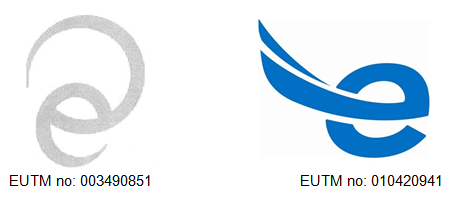
On 16 November 2011, Eolus Vind AB, a Swedish company involved in wind energy industry, applied to register a figurative mark consisting of a stylized letter “e” (EUTM no: 010420941). The registration covered a wide field of goods and services, from electrical energy deriving from wind power, construction and repair of wind power plants and energy distribution, to insurance and legal services.
On 29 February 2012, the trademark was opposed (case B 001981417) by Edison S.p.A., an Italian company. They are known for electrical power production and sale, as well as their involvement in energy efficiency solutions, gas import infrastructures and storage plants. They claimed that Eolus´ “e” provokes a likelihood of confusion in comparison to their trademark, a figurative trademark resembling a letter “e” (EUTM no: 003490851). In addition, given the reputation Edison enjoys as a company, as well as the notoriety of their trademark, Eolus´ “e” should be deleted for all classes.
The Opposition Division of the EUIPO examined the similarity of goods and services, the similarity of the trademarks and the likelihood of confusion. Starting with the similarity of goods and services, the Opposition Division deduced that it varies from identical (for the distribution of electrical energy and the production of electrical energy) to dissimilar.
Next, the visual similarity of the signs consisted of them both being decorated letters “e”. However, while Eolus´ “e” is blue and with an impression of a gush of wind blowing it away, Edison´s “e” is grey and simulating two circles partially overlapping. When spoken, both signs would be pronounced equally, irrespective of the territory of the speaker. Conceptually, the Opposition Division noticed that the analogous note they have is the reference to energy. Therefore, taking all abovementioned into consideration, the signs were similar.
Touching on the topic of the claimed acquired distinctiveness, the Opposition Division stated that the evidence offered by Edison only showed that it was a big company in Italy, and did not demonstrate an enhanced distinctiveness.
In conclusion, the Office mentioned the problematics of a single letter trademark. They stated that the EUIPO does not consider them distinctive, unless sufficiently stylized to overcome the fact that they are, in essence, only one letter. In this case, both “e”s are embellished enough, and done so in a very different manner. Therefore, the likelihood of confusion is small, and the opposition should be rejected.
On 28 November 2013, Edison appealed (decision R2358/2013-1 of 25 February 2015), building the case predominantly around their claim that their goods and services were either identical or highly similar to the applicant´s.
EUIPO´s Board of Appeal stated that Edison´s trademark was more reminiscent of two crescents than the letter “e”, but, given the company´s longstanding presence in the energy business, the sign could have been recognized as a letter. This did not undermine the fact that the trademarks in question were visually quite different, both in color and the font. The question if the sign was perceived as a letter was also relevant for the phonetic and conceptual similarities. If seen as a letter, they are phonetically and conceptually identical. However, the Board of Appeal was of the opinion that the consumer would primarily describe the sign, not pronounce it, making phonetic similarity non-existent. As for the conceptual similarity, single letter marks could be backed by a concept if they maintained a link to the goods or service, which in this case, they did. However, the usage of the letter “e” was descriptive, and therefore, limited its importance. The other possible concept, the concept of motion, was only present with Eolus´ trademark, thus differentiating the signs even further.
The Board of Appeal did not fully agree with Opposition Division regarding the one-letter trademarks. They stated that they are not devoid of any distinctive character, unless proven differently. However, their distinctiveness is harder to establish. What does not help is the common and widespread use of a single letter to abbreviate its owner or service, making them frequent and less special. The saving grace are the add-ons and decorations to the letter, which, just as in this case, can augment the mark´s distinctiveness.
As for the contested goods and services, the Board of Appeal restated that the goods and services range from identical to completely dissimilar. However, even for the goods and services which were similar, Edison failed to show that both undertakings were offering them. Therefore, the only services where the consumer might be led into confusion were the identical “Electricity distribution of wind power energy” and “Energy production of wind power energy”. In this scope, the Opposition Division´s decision was overturned.
Decision of the EGC
Despite the partial success, Edison decided to take the matter to the EGC. The decision (case T-276/15) was brought on 14 March 2017, with no good news for Edison.
When talking about the similarities of the signs, the EGC agreed in the entirety with the Board of Appeal, stating that the visual one was low, phonetic would either not exist or be identical, and the conceptual one existed only if they were both regarded as an “e”, in which case it would also be descriptive.
As for the goods and services, Edison did not offer any additional evidence, but rather relied on the fact that “as a matter of principle” or “is well-known that” the goods were produced or provided by the same undertakings. The ECG could not accept this logic. In addition, the Court argued that, even if they were produced by the same manufacturer, it would make them similar, and not identical.
A second question that Edison raised was the claimed “point-blank” inadmissibility of their evidence showing enhanced distinctiveness. The EGC stated that it was quite the contrary; the Board of Appeal did take all the provided documents into consideration, but deemed them misplaced, as they showed the company´s economic success instead of public recognition of the mark.
All this led the EGC completely to uphold the Board of Appeal´s decision.
On 15 March 2017, WIPO published a press release, showing their 2016 in numbers. And there was a lot to celebrate, as 2016 marked a record-breaking number of patent, trademark and design applications, and a significant growth on all three fronts for the seventh year in a row.
On the gloomier note, the number of cybersquatting disputes under the Uniform Domain Name Dispute Resolution Policy (UDRP) broke a record as well, with its 10% rise in comparisom to the number in 2015.
Trademarks
In 2016, 52 550 trademark applications were filed, with 347 544 designations to Madrid Treaty signatory countries (most of which to China (22 314 designations), the European Union (21 526) and the US (20 979)). The US and Germany are the predominant applicants, both with over 7500 applications. The rest of the top five are France, China and Switzerland.
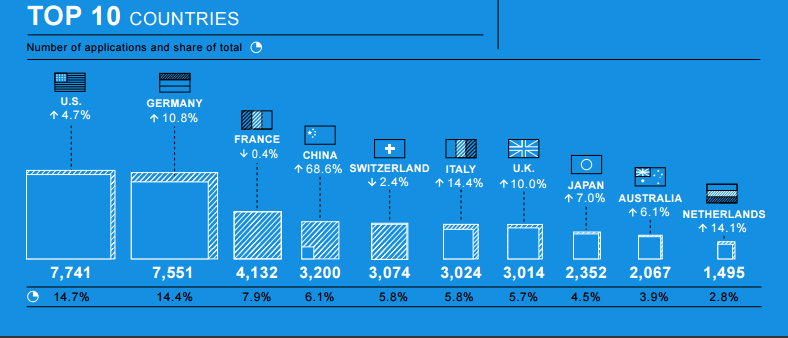
China was the surprise of the day, with its 68.6% growth in comparison to 2015. Also, Russian Federation (+32.7%), Italy (+14.4%) and the Netherlands (+14.1%) had enviable increases in the numbers of applications.
When talking about individual applicants, the top five places go to European companies. French L’Oréal took the lead with its 150 TMAs, closely followed by British Glaxo Group (141), German BMW and Lidl, and Swiss Novartis.
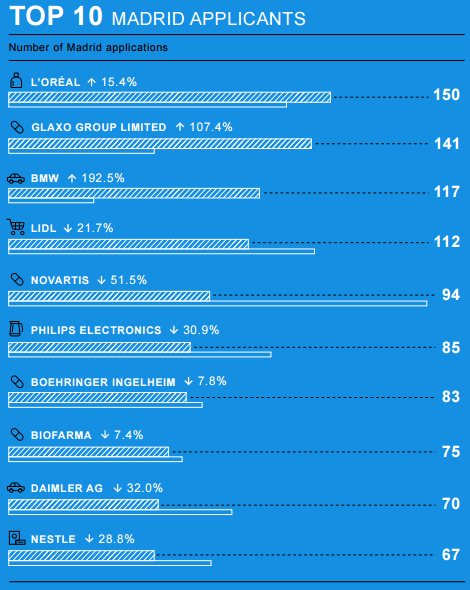
Despite to what may be deduced from the top applicants´ industries, most applications were for the classes covering computers and electronics, services for business and technological services, leisure and educational services and clothing.
Industrial designs
While patents and trademarks showed a similar growth rate, the same cannot be said about designs. In the previous year, 5562 applications were filed, containing 18 716 designs, which means a 35.3% increase.
Most applications come from Germany (3917) and Switzerland (2555). The third place belongs to South Korea, whose Samsung was the last year´s biggest applicant company. However, this year, they were surpassed by Dutch Fonkel Meubelmarketing, with their 953 designs, compared to Samsung´s 862. They are followed by another Korean technology giant, LG Electronics, and their 728 applications.
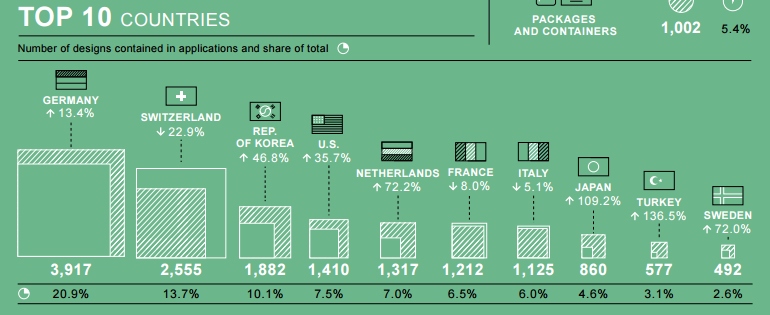
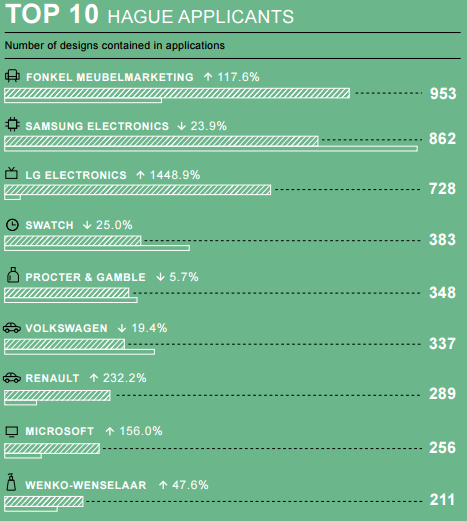
Unsurprisingly, most design applications cover furnishing (11.3%), communication equipment (10%), vehicles (7.8%) and watches (6.9%).
An interesting thing to see are the biggest improvers. The story here is not equal to China´s boost in TM and patent registrations. At the first glance, Turkey´s 136.5% and Japans 109.2% growths seem far better. However, their starting points were not the same. Turkey and Japan were not at a position to boast about their design protection. Therefore, their numbers should be considered as an excellent start to an elevated registration system.
Patents
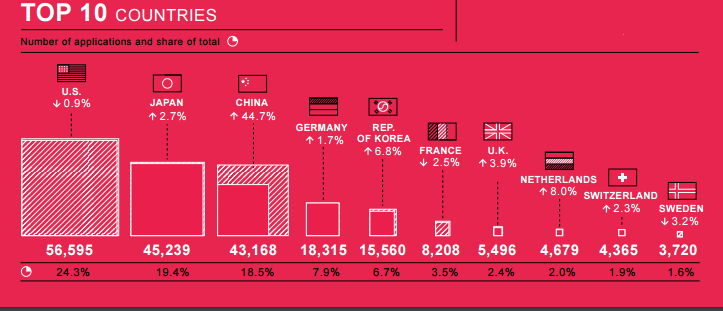
Patents filed under the Patent Cooperation Treaty (PCT) show a 7.3% increase from 2015, amounting to 233 000. Predictably, most of them come from digital communication and computer technology companies. Also, the ranking of the countries has remained the same, with the US at the helm, followed by Japan, China and Germany.
However, here is where the biggest surprise comes in. China has marked a staggering 44.7% surge in the number of patent applications. If they continue growing at this rate, within the next two years it can be expected for them to take the reign from the US (which has been in the lead for the past 39 years). Other countries showing significant rise are Italy, Israel and India, all showing approx. 9.5% more international applications.
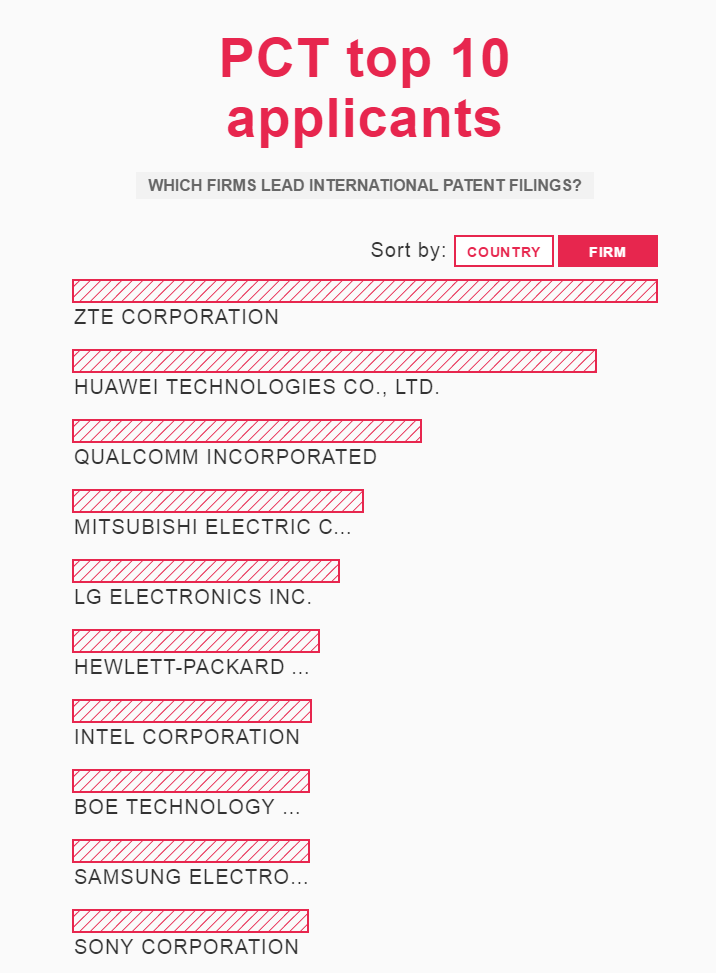
A lot of the credits for China´s success go to the telecommunications magnates ZTE Corporation and Huawei Technologies, who top the list of the applicants. They are followed by American Qualcomm Inc., Japanese Mitsubishi Electric Group and Korean LG Electronics.
Among educational institutions, there is an equal division of places between Asian and American universities in the top 20. However, the top 10 is predominantly American, with University of California, MIT, Harvard, Johns Hopkins and Texas System taking the top positions.
Cybersquatting disputes
With the introduction of 1200 new generic top-level domains (gTLDs), business owners received an opportunity to tailor their websites according to their needs, marketing strategies and wishes. However, the side effect of such freedom is a flourishing market for cybersquatters. In 2016, 3036 cases were brought to WIPO, regarding 5374 domain names. Sometimes, the cases involved a country code Top-Level Domain (ccTLD), but a lot more frequently, it was about the new gTLDs (usually .XYZ, .TOP and .CLUB).
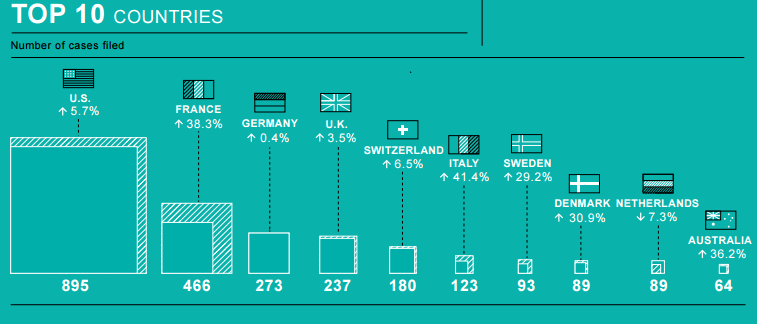
According to WIPO´s statistics, most disputes came from the US, almost twice more than the second-placed France, and three times more than the third-placed Germany. Equally alarming are the numbers showing the upsurge of cases, which in France’s case amounts to a high 38%, Australia´s 36%, and Denmark´s and Sweden´s around 30%.
12% of cases evolved around banking and finance, followed by fashion, heavy industry and machinery, Internet and IT and biotechnology and pharmaceuticals, whose numbers vary from 7-9% of all disputes.
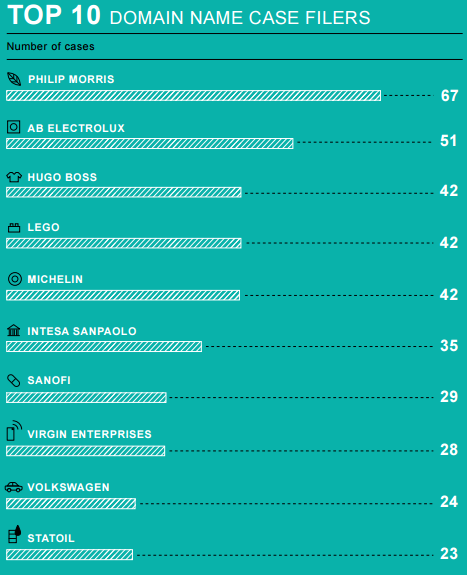
American tobacco company Philip Morris can call themselves 2016´s most diligent anti-cybersquatter, with 67 cases brought to WIPO, along with AB Electrolux (51 cases) and Hugo Boss, LEGO, and Michelin (42 disputes each).
Intellectual Property disputes
Solving domain name issues is only a part of WIPO´s attempts to actively resolve IP-related disputes. Another part is the WIPO Arbitration and Mediation Center, aimed at offering Alternative Dispute Resolutions (ADR) options to private parties caught in an international commercial dispute. In 2016, the most favored option was mediation, followed by arbitration and the shorter expedited arbitration.
What characterized the cases was their diversity. Out of the 60 cases WIPO received, the parties involved companies, both large and SMEs, as well as private persons, NGOs, municipalities, etc., deriving from 19 countries. 34% were patent-, 20.5% Information and Communication Technology-, 13.6% copyright-, 13.6% trademark-related, while the other 18% was dispersed between distribution and franchising agreements, design and cultural heritage protection.
Combining the fact that Italy is the third biggest producer of GI products in the EU and that Italian cuisine is cherished across the globe, it is safe to say that IP infringements are imminent. This time the legal battle stems from Tuscany, Italy´s fruitful producer of wine, cheese, cold cuts and, important for this case, extra virgin olive oil.
[[{"type":"media","fid":"4760","view_mode":"default","instance_fields":"override","attributes":{"height":827,"width":1000,"style":"width: 800px; height: 414px;"},"field_file_image_alt_text[und][0][value]":"","field_file_image_title_text[und][0][value]":""}]]
Background of the case
On 17 November 2003, Roberto Mengozzi registered the wordmark “TOSCORO” (EUTM no: 002752509) with the EUIPO. It was the name of his line of vinegars and vinaigrettes, sold all over France and Monaco.
In 2012, Consorzio per la tutela dell’olio extravergine di oliva Toscano IGP asked EUIPO to invalidate the trademark, due to infringement of their registered geographical indication “Toscano”. The Cancellation Division deemed that there was a possibility of consumer´s confusion and declared the trademark invalid for classes 29 (“edible oils fats; edible vegetable oils, notably olive oils”) and 30 (“products for flavouring or seasoning foodstuffs, salad dressing“).
Mengozzi appealed to EUIPO´s Board of Appeal (decision R0322/2014-2 of 5 June 2015). Consorzio used the opportunity to ask for the terms “green and black olive creams” and “mayonnaise” to be added to the list of the “off-limits” terms. The appeal did not go as Mengozzi planned, as the Board of Appeal partially agreed with Consorzio. They stated that the difference between olive oil and creams deriving from olive oil was not that prominent. However, the same could not be said for mayonnaise.
Decision of the EGC
Mr. Mengozzi proceeded with the attempts to regain his trademark and took the case to the European General Court (EGC), making EUIPO his opponent and the Consorzio the intervener. The decision was rendered on 2 February 2017. The Court stated that, even though “TOSCORO” did not amount to “Toscano”, they were highly visually and phonetically similar. And, despite the applicant´s claims that Toscoro was a made-up word, that did not mean that the word did not evoke the notion of Tuscany. Taking these facts into consideration, the Court thought that the Board of Appeal did not err when thinking that the consumer might be confused when facing these products. Mr. Mengozzi continued to claim that olive oil and olive cream were not the same products. However, the EGC deduced that there was sufficient evidence that the term “olive cream” was vague enough to include creams containing olive oil. Therefore, the decision of the Board of Appeal should be upheld in its entirety.
[[{"type":"media","fid":"4759","view_mode":"default","instance_fields":"override","attributes":{"height":2000,"width":3000,"style":"width: 800px; height: 533px;"},"field_file_image_alt_text[und][0][value]":"","field_file_image_title_text[und][0][value]":""}]]
After a worrying OECD report last year (more on that here), this year the fight against pirated goods continued with a letter addressed to the president of the European Commission, Mr. Jean-Claude Juncker.
More than 80 companies joined their efforts to alert the Commission of the struggles they are having with counterfeits. All companies are major players in diverse markets, ranging from pharmaceuticals (Bayer, Hermes Pharma), technology (Phillips, HP), food and drinks (Coca Cola, Kellog´s), cosmetics (L´Oreal, Beiersdorf) to vesture (Chanel, Christian Dior Couture).
They reminded of the consequences of pirate trade. Not only does it impact their brands, but also results in job losses. Also, with the lack of security and quality testing, illicit products can have a serious impact on consumers´ safety. Finally, these activities are major contributors and financiers of organized crime.
They pointed out two key points which made counterfeiting easier and more accessible than ever. One is the rise of the Internet, where fakes are presented as the genuine products without investment in time, money or efforts. The second point is the expansion of intermediaries. Nowadays, trade includes more and more middlemen between the seller and the consumer, from social media, search engines, payment and delivery services, etc.
The intermediaries choose their own path: either they join the fight against counterfeits or they take the easier route and sell illicit goods. The companies are of the opinion that the intermediaries can be influenced and that the EU should enable, ease and entice making the right choice. The letter suggests the implementation of an appropriate prevention system, after which the intermediaries would be resolved of liability in case a counterfeit does find its way to the market.
Lastly, the companies urged the Commission to use the upcoming revision of the Directive on Intellectual Property Rights Enforcement to include their suggestions and create a concordant chain of counterfeit-fighting actors.
[[{"type":"media","fid":"4758","view_mode":"default","instance_fields":"override","attributes":{"height":944,"width":969,"style":"width: 800px; height: 779px;"},"field_file_image_alt_text[und][0][value]":"","field_file_image_title_text[und][0][value]":"HAPPY HOLIDAYS from the LexDellmeier IP Team "}]]
Trademark Use in Germany and the EU - Why brand owners must use their trademarks
Trademarks present a link between a brand owner and its consumers. They are the easiest way to differentiate one product from another and one competitor from another, at the same time creating customer loyalty and strengthening of the brand. However, why do brand owners actually need to use their trademark if it is registered? This article tackles the importance of genuine trademark use and how to prove use in Germany and the EU.
How do you receive trademark protection in Germany and the EU?
To get exclusive proprietary rights to a trademark, you have to register it with a designated intellectual property office. If you are seeking for protection restricted to the German territory, the appointed IP office is the Deutsche Patent- und Markenamt (DPMA; English: GPTO). In case you are looking for protection expanded to the whole territory of the European Union, the registration must be conducted by the European Intellectual Property Office (EUIPO). The third option is registering the trademark internationally, with the World Intellectual Property Office (WIPO), with Germany or the EU assigned as the designated countries.
Whichever path you choose, the formal application requirements include concrete data of the applicant, a representation of the desired trademark and a list of the goods and services for which protection is sought.
The IP offices only check if the applied trademark complies with the legal requirements (is the applied trademark eligible for protection, is it distinctive and undescriptive) and do not research if it infringes a previously registered trademark. If the application is admissible, the IP office will publish it. It is up to the owners of the earlier trademarks to oppose the application if they believe it is infringing their rights.
In case there are no opposition proceedings or the proceedings get rejected, the trademark will be registered.
The registration process with the DPMA usually lasts for 7 or 8 months, but exceptional cases might take longer.
Why is genuine use so important?
Whether talking about the German definition of “serious use”, or the EU definition of “genuine use”, the essence stays the same. Genuine use is, according to the European Court of Justice (ECJ), the use that is not serving solely to preserve the rights conferred by the mark. Such use must be consistent with the essential function of a trade mark, which is to guarantee the identity of the origin of goods or services to the consumer or end user by enabling him, without any possibility of confusion, to distinguish the product or service from others. Genuine use of the mark entails use of the mark on the market for the goods or services protected by that mark and not just internal use by the undertaking concerned. (MINIMAX case, C-40/01, of 11 March 2003; link: http://curia.europa.eu/juris/showPdf.jsf;jsessionid=9ea7d2dc30ddf4dba4e35fa142cd9e05fb76a892d278.e34KaxiLc3qMb40Rch0SaxuTbNn0?text=&docid=48120&pageIndex=0&doclang=EN&mode=lst&dir=&occ=first&part=1&cid=188264 )
Contrary to other countries around the world, the specific set of trademark legislation in Germany and the EU privileges the trademark applicant and owner. He does not have to use the mark for the first five years of its existence (during the so-called “grace period”). After the grace period finishes, the trademark is open to legal action against it.
However, not using the trademark, even within the grace period, has its consequences for the future. If you do not use your trademark properly, you can, it the worst case scenario, lose it. After the passage of five years, you could have the trademark cancelled on the grounds of non-use. Another consequence of non-use is the reverse situation to the previously mentioned. In case the trademark owner is the one who wants to file for opposition or cancellation, his request might be rejected as unjustified and foundationless.
How do you prove use?
The following criteria regarding use serve as auxiliary examples. In this respect, the actual circumstances regarding the use, in particular relating to the extent, time period / duration as well as kind of use have to be submitted.
_____________________________________
DURATION | When has the mark been used? |
| Use of the mark has to be proven for usually at least the last 5 years |
GOODS / SERVICES | For which goods/services has the mark been used? |
| Please indicate the exact goods/services which were marked with the trademark and provide examples of that use, e.g. illustrations or photographs of packaging. |
EXTENT | How much and how intensively has the mark been used? |
| Please indicate the extent of use, in particular sales figures or also the number of items, each broken down by years, for the goods/services marked respectively. |
MODE | How and on what has the mark been used? |
| Was the used on the goods themselves, their get-up or their packaging, on invoices, in flyers or other advertising material? How was the mark affixed in these cases? The mode of use (affixing to the goods or their packaging or other use common in the specific branch) should be rendered recognizable. The mark as used must have been used identically or similarly in relation to the registered mark, i.e. it may deviate only slightly from the mark in its registered form. |
| |
PERSON | By whom has the mark been used? By the trademark proprietor himself or by third parties? |
| Use by licensees is considered use by the trademark proprietor. |
PLACE | Where has the mark been used? |
| The mark must have been used in that particular country for which it is registered, i.e.
|
It is important to compile the materials regarding the use as diligently and completely as possible. Generally, the trademark proprietor is adversely affected by any potential deficiencies and doubts regarding the use.
What kind of materials proving use are necessary?
The following materials are suitable for showing the factual circumstances of a use as a mark for the exact goods/services in connection with extent, duration as well as kind of use, based on the criteria of use mentioned above.
A. Statement of the factual cirumstances in the relevant time period:
- Excerpts from sales tables (minimum sales figures may be sufficient), possibly also (minimum) sales figures per item
- Invoices
- Orders and order confirmations
- Advertising material, ads in print media (e.g. in trade or specialized press)
- Leaflets, brochures, (user’s) manuals, etc.
- Illustrations of the mark on the goods themselves (photographs thereof)
- Get-ups, packaging of the goods
- CD-ROMs
- Indication of an identically named domain and its respective date of registration
- Indication of the domain traffic (“visits” and “page views”)
- Website-content submitted as a file
- Copies of websites which mention the mark and indication of date
- Mentioning of the mark by third parties, e.g. in the press, in product reviews, awards
- Trade fairs and exhibitions on which the mark was shown on or in relation to specific goods / services
B. Authentification of use via an Affidavit
- It must be a personal declaration of the signatory (not by the enterprise),
- relating to facts (no legal assessments) and
- based on the personal knowledge of the declarant (no hearsay).
Basically, the affidavit can support material forwarded to the respective office and/or court, e.g. by confirming under oath
- the (minimum) sales figures, possibly also by (minimum) sales figures per item,
- the exact goods/services as well as the
- time period, broken down by annual figures, and the
- country, in which the indicated sales were obtained.
IMPORTANT: Not every country accepts affidavits. In Germany, the German Patent and Trademark Office (GPTO) in general accepts affidavits supporting material forwarded. However, the European Intellectual Property Office (EUIPO) is stricter and due to its own discretion may limit the value and validity of an affidavit. Therfore, review of the documents in advance by an attorney specialized in the field of trademarks / IP is strongly advisable.
Brand Finance Football 50 is an annual study conducted by one of the leading brand valuation and strategy consultancies. The study published on June 6, 2016 determines which of the word largest football clubs have the most powerful and valuable brands.
The numbers do not lie. As can be seen in the chart, the world’s most valuable football club brand this year is Manchester United FC with a brand value estimated at 1,170 USD million. The second position is occupied by the current Champions League Winner, Real Madrid, and the podium’s third place is attributed to its forever greatest rival, Barcelona.
Every football aficionados has heard about the amazing season accomplished by the English club Leicester. Because of this achievement, the club wins the title of the fastest growing football brand of 2016 with a 132% rising while the second place is given to Borussia Mönchengladbach with a rising of ‘only’ 101%. Unfortunately, not every football brand has seen his value increasing. As a matter of fact, football clubs like Newcastle United and Aston Villa have seen a significant decline of their brand values this year. The same applies to the Turkish clubs Galatasaray facing a decline of 34% while Fenerbahce suffers a loss of 21%.
On another area when looking statistics by country, football clubs brands from England & Wales capitalize a total amount of 7,168 USD million representing 48% of the total brand value, whereas, football clubs from Spain and Germany share 19% and 16%, respectively. It is not surprising when it has been established that out of the first 10 most valuable brands, 6 of them come from the UK.
For more information please see BrandFinance’s just published report of 2016 – which includes an executive summary, charts, brand value and much more: http://brandfinance.com/knowledge-centre/reports/brand-finance-football-50-2016/
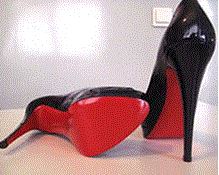
The color red means energy, strength, power and passion. Shoe-wise, for most women it means one thing: Louboutins. However, the road was not easy for the French designer. In-and-out of courts for years now, the battles for his in(famous) “Red Sole” linger on. The most complex one, against van Haren, made its way up to the European Court of Justice (CJEU, ECJ) on 27 May 2016. We are giving you a summary of Louboutin´s time in court, as well as keeping you posted on all the updates.
USA
Christian Louboutin had no problem registering his red soles in the USA. Under the registration numbers 3376197 and 3361597, the US Patent and Trademark Office readily protected “lacquered red sole on footwear” or the “Red Sole Mark”.
However, the problem occurred in 2011, when Yves Saint Laurent (or YSL, for short) produced a line of monochrome high-heeled shoes. One of the represented colors was red, and quite similar to Louboutin´s. Louboutin filed a trademark infringement and unfair competition lawsuit and asked the judge to put a stop on the sale of the whole line, not just the red shoes. YSL counterclaimed, asking for cancellation of the Red Sole trademark because it was purely “ornamental” and “functional.” The District Court of New York agreed with YSL, stating that a single-color mark cannot be protected as it is inherently functional. Secondly, it would significantly hinder both the fashion and arts industries. However, the U.S. Court of Appeals for the Second Circuit did not share their opinion. They dismissed the claim that one color cannot pose as a trademark, due to the previous ruling of the Supreme Court of the United States. Then they looked at Louboutin´s advertising campaign and sales´ figures. Finally, upon examining a survey of the public perception of the red sole, they decided this was a case of acquired distinctiveness. However, this implied only a red sole contrasting another color. In other words, if the whole shoe is red, like YSL´s, then it is allowed to use a red sole. In every other case, this color is reserved for Louboutin.
This was a very diplomatic decision by the Court, as it seemed Louboutin was only getting started with the lawsuits in the USA. Right after YSL he sued Carmen Steffens, a Brazilian shoe designer. However, she was able to prove she was using soles in multiple colors (red being just one of them) since 1996.
Rumors have it that Christian Louboutin even went so far to hire a private investigator to find out if his competitor Dior was planning to make red shoes the following season.
In 2013, Louboutin sued, but settled with the designer Charles Jourdan and the retailer DSW, on the basis of their designs and sales of a red-soled shoe.
JAPAN
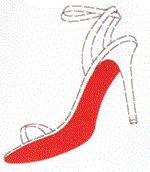
Non-traditional trademark registration is a novelty in Japan. Hardly imaginable, but, one of the most technology- and invention-driven countries introduced non-traditional trademark protection only after the new Trademark Act in 2014. However, only a couple of days after Christian Louboutin filed an application for his red soles (TMA no: 2015-029921), a similar application was filed by his Japanese competitor. It is yet to be seen what is going to happen, but chances are that Louboutin will not take this infringement lightly.
SWITZERLAND
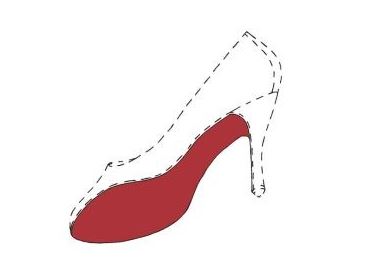
The problem in Switzerland is that the red sole keeps getting rejected for registration. The first application for a position mark was filed on 25 March 2010, but, the Swiss International Property Office rejected the application. Louboutin unsuccessfully appealed, claiming acquired distinctiveness. The problem was that the Swiss IPO defined the relevant public as men and women of all ages, and acquired distinctiveness was extremely hard to prove among such a broadly defined public.
The case eventually reached the Federal Administrative Court, who gave their decision on 27 April 2016 (decision B-6219/2013). The Court redefined the relevant public, saying it should be limited to younger women. However, they stated that the red color is purely decorative and would not have sufficient impact on relevant customers. There is an abundance of red-soled shoes manufactured and imported, and Louboutin´s are just a part of that market. What is interesting is that acquired distinctiveness was not discussed because Louboutin never claimed it at the Federal Administrative Court. This might not be the end of the Swiss story. Louboutin can appeal, but only on legal grounds.
EUROPEAN UNION
In the EU, Christian Louboutin registered his first trademark in 2000 in France. He filed for EU-wide and international protection immediately, and in 2001, he obtained international protection from WIPO (TM no. 1031242). The procedure with the European Union Intellectual Property Office (EUIPO) did not run as smoothly. Louboutin applied on 29 January 2010, but, on 20 September 2010 the application was rejected by EUIPO´s examiner for the lack of distinctiveness. The Board of Appeal did not agree with Examination Office´s decision and registered the trademark (EUTM no: 008845539) on 16 June 2011.
GERMANY
However, the peace in Europe did not last very long after registration. Following a few inadmissible opposition filings, the first proper threat came when the German shoe retailer Roland SE opposed the trademark. The reason was the possibility of confusion with his trademark “MY SHOES” (EUTM no. 920225). He had a figurative sign registered, with words “MY SHOES” written in white, on a blue and red background. However, the shade of red was very similar on both signs. However, upon examination, the Board of Appeal decided that it is very unlikely the consumer would mistake one brand for another (case R1591/2013-1).

Roland continued with litigation on front of the European General Court (EGC). The verdict was brought in on 16 July 2015 (case T‑631/14). The Court stated that there was no visual similarity between the trademarks, even though the background of “MY SHOES” was predominately red. As the red sole was a position mark and will not be read even approximately similarly to “MY SHOES”, there is no phonetic similarity. As for the conceptual similarity, Roland claimed it is in the connection of the color red and shoes. On one side, we have a red shoe, and on the other hand the word “shoe” on a red backdrop. Also, they both create an image of passion, aggression and heat in consumers´ minds. The Court dismissed these claims as unproven. Also, red was just one of the elements of the previous mark, and there is no concept behind it. All elements considered, the EGC decided there was no similarity that might cause confusion and supported the EUIPO´s decision. This was not where the story ended.
Roland appealed to the ECJ, who gave its final word on 14 April 2016 (case C-515/15 P). The ECJ mostly repeated the wording of previous decisions. The red square in the Roland´s trademark was only decorative and it does not dominate the trademark. There is no visual, phonetic or conceptual similarity. Therefore, the decision of the EGC should be upheld.
FRANCE
In midst of his American lawsuit frenzy, Christian Louboutin also sued Zara Spain in France. The storyline was very similar to the others, Louboutin claimed trademark infringement and unfair competition, while Zara claimed invalidity of his trademark. The Parisian First Instance Court partially ruled in Louboutin´s favor. They stated that although there is no trademark infringement or likelihood of confusion, Zara might have benefited from the red sole on their shoes, and ordered the Spanish company to pay damages.
However, upon appeal, this verdict was overturned (see decision 09/00405). The Court of Appeal decided that there is no trademark infringement due to the fact that there should be no registered trademark, as it lacked in distinctiveness. Neither were the unfair competition claims valid, because no designer can have the monopoly on the concept of putting a red sole on a shoe. Louboutin appealed to the French Supreme Court, which took the stand of the Court of Appeal. They stated that the trademark does lack distinctiveness and should be considered as invalid. However, their reasoning differed from the Court of Appeal´s. The Supreme Court said it was a 3D trademark rather than a 2D one. It could not be registered because the shape is imposed by its function. Where Louboutin made a sloppy mistake was not defining the exact red nuance. Also, the graphical representation of the trademark consisted of multiple shades of red. Therefore, the Supreme Court lined up with the Court of Appeal and Zara ended up as the final winner.
BELGIUM
In Belgium, one of Louboutin´s opponents was Dr. Adams Footwear. The Brussels Court of First instance ruled in favor of Dr. Adams. However, the Court of Appeal did not agree with the previous decision and prohibited Dr. Adams´ further sale of red sole shoes (decision 2014/AR/734 of 18 November 2014.
The second Belgian opponent was Van Dalen Footwear B.V., a Benelux retail store holding a red sole shoe in their repertoire. Louboutin’s claims were predictable, including trademark infringement, unlawful practice and misleading of the customers. Van Dalen’s counterclaims were that the trademark is invalid, because it does not fulfill the prerequisites for a shape mark. The Brussels District Court went along with Van Dalen´s claims (decision 2013/6154 of 20 March 2014). Using the famous Bang & Olufsen loudspeaker case as a reference (case T-508/08) they concurred with the red sole giving substantial value to the shoe. Also, observing the evidence suggested by Van Dalen, showing an abundance of red-soled shoes by different designers and retailers, the Court thought that the shape is common and lacked distinctiveness. With all this in mind, they declared the trademark invalid.
Louboutin instantly appealed and by 18 November 2014 he already had a new verdict in his pocket. Luckily for him, the Brussels Court of Appeal overturned the previous decision (case 2014/AR/843). First they rethought the idea of the sole being a pure shape mark, and disagreed with the First Instance Court. In fact, they abandoned the idea of a shape mark in its entirety, stating that adding another element to a shape does not automatically mean the trademark is still a shape mark. Therefore, the color of the sole cannot be disregarded. However, it does not constitute a color mark, because of the special location and manner in which it is displayed. Bearing all this in mind, the trademark is figurative. Also, it is obvious that the relevant public does know what a red sole means and that the mark is an indication of origin. It is distinctive, albeit the abundance of other red sole shoes. The Appellate Court took a completely different stand from the First Instance Court and imposed a sales’ ban on Van Dalen. This was the first time the judges started wondering what was the limit of the definition of shape, which was elaborated further in the next case, Louboutin v Van Haren.
THE NETHERLANDS
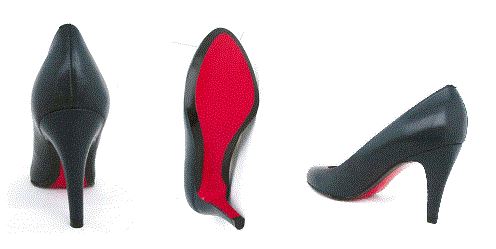
Louboutin sued Van Haren Schoenen B.V., a part of the German Deichmann Group, operating throughout the Netherlands. He based his lawsuit on the Benelux registration of the trademark (TM no. 0874489) in 2009. Van Haren was selling black and blue high-heeled shoes with red soles named and promoted as "5th Avenue by Halle Berry", and Louboutin filed for trademark infringement and deliberate misleading of the customers. He said that the similarity of the shoes would lead the customers into confusion and eventually lead to the dilution of his trademark. Van Haren replied by saying that the red color as a trademark has to comply with the strict rules for registrability of shape marks, set in the Libertel case. The use of the red sole is purely ornamental, which makes the trademark invalid. Therefore, the Hague District Court (case httpLJN:BZ7844) had to first decide whether the “Red Sole” is a color, shape or a position mark. It quickly excluded a color mark, as it cannot be separated from the product. Instead, it said it was a hybrid, a combined color and shape mark. The Court stated that acquired distinctiveness can also be considered, as Louboutin´s red sole is always used the same way and is a major part of the branding of the shoe, and, not just there for decorative purposes. Also, the provided sales´ figures show a large number of sales and enhanced recognizabilty among Benelux population. Comparing the shoes, there are obvious similarities and the fact that Louboutin is an exclusive brand (a.k.a. not sold in mass market stores or for low prices) makes no difference. Louboutin got a preliminary injunction against Van Haren, who had to stop selling their red-soled shoes immediately.
Van Haren appealed to the Appellate Court in Den Haag (case C/09/450182), referring to the decision in Van Dalen vs Louboutin, especially the part that the “Sole” is a shape mark which gives substantial value to the product and lacks distinctiveness. Louboutin argued that the trademark is not purely a shape, but also a color mark. A survey enclosed by Van Haren actually showed a rather large recognizabilty of the “Louboutin sole”. Also, they have shown they were aware of the Louboutin trademark in their adverts. The Court took both facts into consideration and decided that Van Haren was leading the customers into confusion. However, a major twist in the case occurred with the judges being unsure how to correctly interpret, and subsequently apply the Benelux Convention on Intellectual Property (Trademarks and Designs) , whose wording was in line with the EU Trademark Directive (Directive 2008/95/EC). The Directive says:
“Article 3
Grounds for refusal or invalidity
1. The following shall not be registered or, if registered, shall be liable to be declared invalid:
…
(e) signs which consist exclusively of:
(i) the shape which results from the nature of the goods themselves;
(ii) the shape of goods which is necessary to obtain a technical result;
(iii) the shape which gives substantial value to the goods;”
While Van Haren focused on the part that said “substantial value”, Louboutin focused on “exclusively of the shape”, saying color is not a shape. Van Haren replied that they relied on a new version of the Directive from 2015 (Directive (EU) 2015/2436), which says “the shape, or another characteristic, which gives substantial value to the goods”. The vagueness of the wording “or another characteristic” enticed the Court to refer a preliminary question to the CJEU. The Court asked: “Is the notion of ‘shape’ within the meaning of Article 3(1)(e)(iii) of Directive 2008/95/EC to approximate the laws of other Member States relating to Trade Marks limited to the three-dimensional properties of the goods, such as their contours, measurements and volume (expressed three-dimensionally), or does it include other (non three-dimensional) properties, such as their color?”. The question is backed by translational problems of the Directive, as the translation of the word “shape” in some languages includes both signs in both two and three dimensions, and some is limited to 3D.
The ball is now at the ECJ’s court(room), and their answer is highly anticipated.
Since 2012, one of the burning topics worldwide has been the protection of trade secrets. With new proposals to update current legislation coming from all major markets, it is only logical for the EU to jump on the bandwagon and acknowledge that the current fragmented legislation is not up to standards.
Currently, it seems only as a Member State has specific legislation concerning trade secrets, along with pending proposals in France and Romania. Other countries only have very limited provisions in their laws, whether in their criminal codes, civil codes, labor laws or other legislation.
This is all about to change, as the new EU Trade Secrets Directive was adopted on May 27, 2016, with a 2-year time frame to implement the changes.
General information about trade secrets
Trade secrets are confidential information, generally unknown to the public and of commercial value to the company. They can be formulas, processes, designs and patterns, methods etc., and valued for a very short time, or on a longer basis. The main benefit for a company from the secrecy is the leverage they get on their competitors. Therefore, trade secrets are of outmost value for many companies.
The European Commission has stated: “Businesses, irrespective of their size, value trade secrets as much as patents and other forms of intellectual property right and use confidentiality as a business competitiveness and research innovation management tool.”
Trade secrets are important both to small businesses and large conglomerates. Not all secretive material can be otherwise protected. If the secret does not fulfill the strictly-given criteria for intellectual property protection, it would be open to breaches of secrecy. Even if there is a possibility of IP protection, the process can be quite expensive and lengthy, so smaller businesses might willingly opt for trade secrecy. A large firm usually has the means for legal protection, but might prefer not to disclose the secret for other reasons. Oddly enough, a survey has shown that larger firms find trade secrets more valuable than smaller companies.
The protection of trade secrets is important to companies for two reasons, predominantly for economic purposes. Firstly, the companies invest their resources in innovation, and expect to reap the benefits. If a secret leaks and their competitors find out about it, they would start production of the same good or service, making the initial investments unprofitable. Innovation would subsequently come to a stall. The second reason to protect trade secrets is that misappropriation is very costly to the company.
There is another side of the story, where innovation might actually be blocked by trade secrets. It is with subsequent innovations, where one firm “piggy-backs” on another´s invention, making it better, implementing their new ideas on an old product. Trade secrets make this genuinely harder or impossible, because the second firm will have to start from scratch.
The problem in the European Union is that there is no EU-wide legislation tackling these issues. Given trade secrets´ cross-border nature, the lack of uniformity and the multitude of national approaches have led to inconsistencies in their protection and a high number of misappropriations.
Relationship between trade secrets and other IP rights
Often compared to patents, trade secrets can present an alternative way to protect inventions. If the invention lacks requirements to be registered as a patent, secrets are the only route to protection. The lack of obligation to disclose the secrets of their product is just another thing that makes them so alluring to inventors. There is also no need for formal registration, which makes the process easier and less expensive. Besides, in some industries the market moves so fast and innovations are so frequent, registration becomes an obstruction. The thoroughness of searches makes the registration process too slow to follow the speed of development. Another attractive characteristic is trade secrets´ longevity. It is not time-limited and there is no need of costly periodic renewals. Unfortunately, this longevity is a very fragile turf. A secret might last for centuries, but it could also last for a day. A patent, as a registered right, gives, in general, greater legal certainty. It may last only for a certain period of time, but you claim the right of ownership. Also, keeping a secret is not without its costs. The constant investigations and investments into keeping information secret also have their price.
TRIPS Agreement
It is not true to say trade secrets underlie no legal protection. There is a provision in the TRIPS Agreement (Agreement on Trade-Related Aspects of Intellectual Property Rights) defining and acknowledging trade secrets. Created under the wing of World Trade Organization (WTO) and signed in 1994, it creates a framework for all the EU Member States, along with Switzerland, Japan and the USA. The applicable article of the law reveals the following wording:
Article 39.
2. Natural and legal persons shall have the possibility of preventing information lawfully within their control from being disclosed to, acquired by, or used by others without their consent in a manner contrary to honest commercial practices (10) so long as such information:
(a) is secret in the sense that it is not, as a body or in the precise configuration and assembly of its components, generally known among or readily accessible to persons within the circles that normally deal with the kind of information in question;
(b) has commercial value because it is secret; and
(c) has been subject to reasonable steps under the circumstances, by the person lawfully in control of the information, to keep it secret.
This is the fundamental pillar of trade secrets´ protection in the world. The signatory states are allowed to impose a stricter regime, but this is the limit beneath which they can not go. Considering TRIPS was obligatory to be implemented in all the EU Member States, why is there still the need to create EU legislation? The problem is that it was left to each state to choose the way to implement the agreement. Of course, the success of the results varied from country to country and the final outcome is not satisfactory.
For example: Sweden has trade secrets legislation. Italy, Portugal and France all rely on their Intellectual Property Codes, but Italy does and Portugal does not consider trade secrets as an IP right. And in France the provision is only applicable for manufacturing secrets. Further, the Netherlands and Luxembourg find tort law applicable, and Austria, Germany, Poland and Spain implement trade secrets in their competition laws. Adding to the confusion, most countries have a provision on trade secrets in both their labor law and criminal codes. And finally, in common law countries trade secrets are not regulated by statutory law at all, but by contractual obligations.
Additional reasons for further regulation
As mentioned, Member States are currently regulating trade secrets through a variety of laws, like criminal, civil, tort, competition, contract or labor law. There is no uniform approach to safe-keeping of secrets. This presents itself as an impediment to international trade and hinders possible investors. The Commission´s survey from June 2013 has shown a very big difference in the number of protective measures the companies themselves implement. In Germany, 40% of companies invest in some sort of self-protecting measure, while in Italy this number is as low as 8%. The discrepancies go as far as the definition of trade secrets (or, some countries, lack thereof). Also, in some countries misappropriations are treated as breaches of contractual obligations, and in some, contracts are irrelevant. All this means that an investor should modify the secret information and/or his approach for every Member State he wants to do business in.
Currently, the legal remedies vary. Although most Member States do, a few countries do not recognize trade secrets as a criminal offence. Also, alternative methods could come in handy, like “regular” theft or unauthorized access.Sometimes, misappropriation is considered as an offence, and not as a crime. In some countries, competition law could be applied, but the point of a dominant position in the market is still quite subjective and does not add to legal certainty.
Another huge problem the companies are facing is the lack of protection during litigation. Most countries have no means of protecting trade secrets from leaking during trial, which somewhat defies the purpose of the procedure.
Commission´s Study on Trade Secrets and Confidential Business Information in the Internal Market
In 2013, the Commission ordered a study on internal market, including a target group of different companies, with a focus and small and medium enterprises. The results have shown that 75% of the businesses find trade secrets very important. 20% have actually suffered from misappropriation, and that number doubles when asked if the number of leakages is on a rise. The results have shown almost all industry sectors are exposed to this behavior, but especially the manufacturing and business sector and trade-related businesses. The chemical and pharmaceutical sector showed a special kind of vulnerability, as they are highly subjectable to industrial espionage and information leakages from subjects on multiple levels (employees, regulatory service, third parties). Also, their number of misappropriations is on the biggest rise.
The most worrying numbers do not come from the number of misconducts, but, the number of judicial interventions. Only 40% of attacked companies sought judicial protection, mostly because of the difficulties collecting evidence, litigation costs and worry for their reputation.
When asked if there was a need for EU legislation on trade secrets, the result was predominantly “Yes”. Most businesses answered they wanted the new legislation to clarify what trade secrets are and why they should be protected and to define rules on criminal sanctions and fines for the responsible person. Also, to ensure confidentiality during legal proceedings and unify rules on calculating damages. Further, they wanted the Directive to uniform contractual non-compete and confidentiality clauses and national court orders to stop the use of illegally obtained trade secrets and import of products made abusing trade secrets.
Examples from other countries
It is useful to take a look at the possible paths to protection other countries have taken. Namely, we are talking about the USA, Japan and Switzerland. All with different approaches, overlapping in some aspects, differing in the other, these market leaders make a good learning tool for the European Union.
The thing they all have in common is the existence of “corporate criminal liability”. It is a term meaning that the company is liable for the offences committed by its employees. Also, they treat negligence similarly. If there was no intent to commit a crime, the perpetrator will not face criminal charges.
- USA
Considering trade secrets as the “fourth IP right”, along with copyright, patents and trademarks, and with a specific law concerning trade secrets, the USA is one step ahead of the EU. The Uniform Trade Secrets Act (UTSA) is adopted in almost all States (47, plus Puerto Rico, District of Columbia and the Virgin Islands).
The UTSA defines trade secrets and explains the types of possible misappropriations. It states the three elements for a trade secret: the information must qualify for protection, it must be generally unknown and intended to be protected. The trade secret holder must prove the information was wrongfully acquired, and that he has implemented reasonable measures for their protection. Unfortunately, the term “reasonable measures” is not defined by the Act, but the US Patent and Trademark Office says it means measures like informing employees of the trade secret policy and signing confidentiality agreements, keeping the information on a need-to-know basis, physically restricting access to data, non-disclosure agreements with third parties, etc.
The scope of protection is limited by the perpetrator´s knowledge of his criminal activities. If he is in good faith and stops his unlawful conduct immediately, he can3not be persecuted.
Even the problem of licensing trade secrets has been tackled. They call this the ”black box dilemma”. The potential licensee does not want to buy something still unseen, while the trade secret owner is at risk of losing both secrecy and remuneration. The solution is signing non-disclosure, confidential disclosure or pre-negotiation agreements.
Although unlawful disclosure of trade secrets is generally considered a tort, when done by a foreign government, trade secrets misappropriation falls under the Economic Espionage Act, and is considered a federal crime.
Due to a specific governmental system, criminal sanctions have been left for the federal states to regulate. Texas and California have taken the matter the furthest, adopting special criminal statutes regulating the matter. The most usual remedies are temporary restraining orders, injunctions to cease infringement and damages.
USA has found a solution to protect the secretive nature of the information in a way most unusual for a common law procedure. Usually, in the pre-trial stage you are obliged to full disclosure of evidence, but here, you are allowed to ask the judge to limit the exposure of evidence with a protective order. Also, you can ask for the restriction of public access to the courtroom, and after the trial has finished, you can ask for a sealing order.
A growing number of litigation has been noticed in the recent years, especially on the federate level. Most cases were brought by computer programming industry, followed by insurance companies, brokers and electronic components producers. The cases indicate that very little misappropriators were actually third parties. Over 50% of perpetrators are either employees or former employees, disclosing internal business information, client lists or technical information and know-how.
In 2015 a new bill was introduced to the Congress, and it is likely it is going to be adopted. It would bring supremacy over state laws. The main aim of the bill is reaching uniformity in state laws and pushing the cases towards federal courts, in order to reach a higher level of professionalism and efficiency in dealing with interstate and international cases. The main change the bill introduces is that a private right of action that can be brought to federal courts. What looks of the final product, as well as its effects, is yet to be seen.
Although UTSA is considered renewal-ready and not keeping up with exceeding digitalization, it is still an example of (relatively) successful option of trade secrets´ protection.
On 11 May 2016, a new bill was signed by the president, called Defend Trade Secrets Act (DTSA). It is considered to be the continuation of the Espionage Act of 1996 and Forbes Magazine named it the biggest development in IP in America in years. Now, private companies can bring their cases to the federal court. Secondly, whistleblowers are granted immunity in certain cases, and this clause has to be added to all non-disclosure agreements.
- JAPAN
Both Japan and Switzerland do not have special laws for trade secrets. But, they do have specialized articles in their competition laws. Japan´s Unfair Competition Prevention Act (UCPA, adopted in 1991, amended to include trade secrets in 2003) defines the term trade secrets and explains the possible misconducts and their consequences. Nevertheless, with its budding manufacture and high-tech sectors, Japan is a playground for misappropriators. According to the Japanese Ministry of Economy, Trade and Industry (METI), approximately 40% of large companies or 15% of all companies in Japan have experienced information leakages. Therefore, there is an initiative by the government to amend the existing act with a focus on protecting technical information and successfully combating the increasingly sophisticated methods of attacks.
A trade secret- according to the UCPA- encompasses three requirements very similar to the TRIPS definition: it has to be kept secret, to be useful for business and not publicly known. The disputable term among these is “to be kept secret”. Usually it is observed if the access to information really was restricted and if it was easily recognizable that the information is supposed to stay secret.
During litigation, it is allowed to exclude the other party from a part of the proceedings in order to keep the secrets safe. Also, the other party can be excluded from evidence examination.
Legislation-wise, the Japanese courts do not rely solely on UCPA, criminal sanctions are also be found in the Criminal Code, but it is rarely used.
What can be noticed about Japan is the lack of an interim measure. You can obtain damages, restraint measures or the so-called “necessary measures to restore business credibility”, but only in the course of main proceedings.
- SWITZERLAND
Opposing USA and Japan, Switzerland does not have a strict definition or a law concerning trade secrets. The protection is built on their Competition law, Criminal Code, case law and Art. 39.2 of the TRIPS Agreement. Trade secrets are not recognized as an IP right. What additionally weakens protection is the lack of uniform terminology. A judge treats trade secrets differently depending on the legal basis he uses.
Rather uniquely, the misappropriator in Switzerland is liable whether he was in good or bad faith. If he was in good faith, he will not be held criminally liable, but there will be a trial in front of the Civil Court.
- SWEDEN
Being the only Member State with existing legislation for protection of Trade Secrets, it is interesting to see if and how will the new Directive will affect their current laws. The Act on the Protection of Trade Secrets was adopted in 1990.
According to the Act, a trade secret is information (in any form), concerning the business or industrial relations, which the owner wants to keep secret, and whose dissemination would cause damage to the owner in regards to his competition. The Act deals with both trade espionage and tampering with secrets. The predicted remedies are damages, fines and confiscation of products, combined with the remedies foreseen by the Swedish Criminal Code.
Comparing the two documents, it does not seem like there will be any problems with consolidating national and supranational legislation. They seem to be compatible and, it looks as though not much will change in Sweden.
EU Directive on the protection of undisclosed know-how and business information (trade secrets) against their unlawful acquisition, use and disclosure
The EU Directive goals are improving the conditions of innovative business activity, protecting current investments and enticing new ones, reducing fragmentation and promoting research and development. The Commission agreed that reaching these goals on a supranational level would cut the efforts in half in comparison to reaching the national goals first, and then trying to extend to meet the Union level.
They isolated two main problems: the subpar incentives for cross-border innovation, due to the lack of legal protection, and reduced competitiveness due to a fragmented legal protection within the EU.
The Commission deems that the most suitable way of reaching their goal would be establishing the illegality of acts of misappropriation of trade secrets and harmonizing national civil remedies for such acts, as well as for rules on preserving confidentiality during and after legal proceedings.
Special acknowledgement should be given to the fact that there is now a clear definition of a trade secret. According to the Commission, a trade secret is information which:
- is secret in the sense that it is not, as a body or in the precise configuration and assembly of its components, generally known among or readily accessible to persons within the circles that normally deal with the kind of information in question;
- has commercial value because it is secret;
- has been subject to reasonable steps under the circumstances, by the person lawfully in control of the information, to keep it secret.
Also, the Directive clearly defines which acts are considered unlawful, whether it is an act of obtaining or just using the trade secret. Equally important, it defines which ways of acquisition and obtainment of the information are exempt and legal. It should be noted that one of the exemptions is whistleblowing, as the Directive says in Art.4.2.(b): “…no entitlement to the application for the measures, procedures and remedies… for revealing a misconduct, wrongdoing or illegal activity, provided that the respondent acted for the purpose of protecting the general public interest”.
The statute of limitation has been defined. It is within one to two years from becoming aware of the misconduct.
It has been left to the Member States to secure the information form leaking during and after the procedure, but the minimum they have to do is to restrict the access to confidential documents and hearings. The interesting part is that the Courts can even restrict the access of the parties, and limit it to their legal representatives, who are obliged to secrecy. Also, the other party can be restricted from accessing the evidence which constitute a business secret. The evidence will still be available to their legal representatives and expert witnesses.
The Directive predicts implementation of minimally three interim measures: cessation of usage and disclosure of the trade secret, prohibition of production or selling the infringing goods and seizing the already produced goods. To get an interim measure, further evidence of the applicant´s rights and of the alleged infringement should be provided.
The burden of proof is on the applicant. He has to prove that the trade secret exists and is owned by the applicant and its unlawful acquisition, usage or disclosure, whether existing or imminent.
The predicted remedies are the cessation or prohibition of use or disclosure of trade secret, a ban on production or selling of infringing products, adopting corrective measures, such as a declaration of infringement, abandoning future production or sales of infringing products, removal of the infringing quality from the product, destruction of such goods or another document or object containing the trade secret. This does not mean the exclusion of damages and publication of judicial decision. Although the decision will be made public, the secrecy of the information must be fully protected. These are set to be the minimum, but, the Member State can expand the given measures.
The implementation of the Directive
There are three key aspects concerning implementation: the timing of implementation, the technical challenges and compliance issues. The Member States have two years to implement all the changes into their national systems, which, according to the Commission, should not be that difficult due to implementation of the TRIPS provisions. A lot of weight is put on the judges´ shoulders, as they are considered to be responsible for the correct application of the Directive once it is implemented.
The aftermath and the outlook
Firstly, trade secrets are still not considered as nor will be leveled with IP rights. There is no exclusivity of ownership granted as with IP rights. If you discover the secret in a lawful way (for example, reverse engineering), the secret holder can not do anything about it.
You are even allowed to sell it to the holder´s competitors. Especially if your buyer is in good faith, then all the parties may be acting lawfully. In this case, the secret holder would be entitled to compensation, but, not to an injunction.
Secondly, even with the Directive, there is still the need for non-compete agreements. Once the employee leaves the firm, there is nothing in the Directive to prevent him from using his knowledge obtained in the former firm.
Thirdly, regarding enforcement, the Enforcement Directive for IP Rights is broader. This might be problematic, as the secret know-how often accompanies other IP rights. Therefore, two regimes will have to be applied.
Fourthly, the Directive will not impede with the freedom of speech. It is one of the exemptions. In fact, some think this provision could be interpreted too broadly and misused. On the other side, the Directive does not allow hiding necessary information either. If the company was obliged to disclose information of public interest, this cannot be considered a trade secret.
One of the great benefits of the Directive is that the States are obliged to implement measures to stop information leakage during court trials. Given that the situation before was quite worrisome, and only Hungary, Germany and the United Kingdom had taken measures to secure the information, this provision might have a great impact.
It is definite that the new Directive brings a lot to the table regarding legal certainty. Although there are some areas that might prove to be disputable, just the existence of legislation for the uniform protection of trade secrets is a step in the right direction.
An Italian decision from March 2016 clarified the scope of protection for shape marks when it comes to jewelry, where a minor design change makes all the difference. The judge confirmed that even the smaller design discrepancies are enough to exclude foul-play and the possibility of misleading the customers.
Background of the case
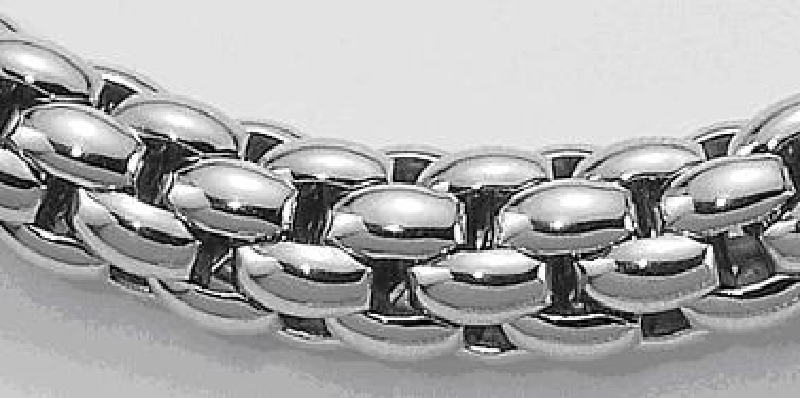
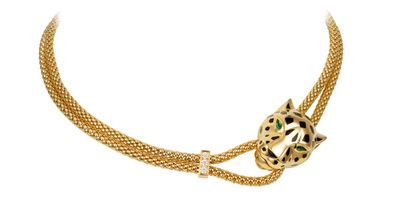
Fope S.r.l, a jewelry designer situated in Vicenza in Italy, has distinguished itself with a special type of “jewelry knit”. They managed to register a 3D trademark in Italy and with the European Intellectual Property Office (EUTM no. 010826881). When Cartier, one of the most significant global jewelers, produced their panther head necklace in 2012, they recognized the knit of the chain as their own. Also, in 2014 Cartier released a whole line of products with a similar pattern called the “Amulette de Cartier” line.
Decision of the court
This was an invitation for Fope to sue Cartier in front of the Venetian court. Fope claimed Cartier was confusing the public and free-riding on Fope´s success, damaging their public image and causing a drop in market share. They asked the Court to ban sales of the necklace and the line, not only in Italy, but EU-wide. Opposing their claims, Cartier said Fope´s trademark was invalid, as the trademark was a shape mark, with the knitting giving substantial value to the product.
Judge Anna Maria Marra recalled the Stokke verdict (case C‑205/13), where it was explained what it meant to give significant value to a shape mark. According to the Stokke judgement, a shape giving substantial value to the product was the one adding to the products attractiveness, market value and competition advantage, to the point where the consumer´s connection of the shape and the product was hindering the market. The judge deemed this was the case where the Stokke criteria were fulfilled.
The additional claim for unfair competition forced the judge to examine the tiny links constituting the necklace chain. She eventually ruled it out, stating that the jewelry market is so crowded that minor differences between products are enough to exclude likelihood of confusion. Especially in this case, where the dominant element of one necklace is a panther´s head, which is characteristic for Cartier jewelry. With both of the Fope´s claims disproven, the judge ruled in favor of Cartier.