

This year’s World Intellectual Property Day is dedicated to female innovators, honouring a significant number of women that are pushing the boundaries in the fields of science, technology, and design and promoting their innovating ideas, courage and curiosity, which help shape the world into a better place.

Source: WIPO
I. Brilliant Examples
Through the years, brilliant women have contributed in changing the way people see things, women who have not been afraid to go against the conservative minds of their era and open the way to other women to unfold their talents , advance human understanding and re-imagine culture and arts. Who has not heard of the unforgettable Marie Sklodowska-Curie, whose name is equivalent to ‘innovation’? Her theory on radioactivity, her discovery of two elements and her the breakthroughs that her work led to, earned her two Nobel Prizes, making her the first woman to earn the prize and the only woman to win it twice. Or the Germans Caroline Herschel, the first woman to receive full recognition in the world of astronomy and the contemporary Christiane Nüsslein-Volhard ? The latter, a biologist specialized in the field of genetics, became the director of the Max-Planck Institute for Developmental Biology in Tübingen and held this position for 29 years. Most notably, however, in 1995 she shared the Nobel Prize with two other scientists for their extensive work in the genetic control of embryonic development. Maybe Carolyn Davidson, the famous graphic designer of the Nike Swoosh logo?
II. Gender Inequality and Women in the Workplace
Despite those impressive examples females are still underrepresented in the areas of Research and Development (R&D). According to the study Women in Science carried out by UNESCO, the worldwide average of women researches by region reaches the number of 29%, whereas, in North America and Western Europe this number extends to 32%. Surprisingly in Germany, a country with major contributions to technological advancement, the percentage of women researchers is even smaller than in the aforementioned ones reaching only the 28% of the total workforce. Central Asia holds the sceptre for the highest percentage of women researchers in the world with an impressive 48%. What is even more disheartening is the fact that female initiative is not financially supported. From the $85 billion total venture capital funding (VC funding) in 2017, all-female teams roughly received $2 billion. That translates into a scarce 2.2% of the total capital. In a strong antithesis their male counterpants received a staggering $67 billion, namely 79% of the total funding. The positive element here is that the situation is slightly better than in 2016, when female founders raised just $1.4 billion-or 1.9% of total VC funding.
III. It all starts within the Family
As the survey shows, even this improvement is not enough to extinguish the shocking gender gap that exists in the business world. The reason for this can be traced a long way back to a woman’s upbringing and her own family, who would discourage her from pursuing a career in innovation. A research conducted by The Institution of Engineering and Technology’s (IET) in the UK shows that 93% would not support their female offspring in pursuing an engineering career, which is showcased in the fact that only around 13% of STEM (Science, Technology, Engineering, Mathematics) professionals are women.
IV. International Initiatives and the Role of Women
This leads back to the question of what is practically done to reverse these facts. Young girls around the globe should not feel disheartened when they are bombarded by male scientific archetypes in TV, in movies, in pop culture in general. They should go forth and employ their intellect and talent. Organizations like STEMNET are trying to get women to promote themselves in the men dominated professional areas by appointing female ambassadors to inform young girls about the working opportunities and encourage them to act on their dreams. This year the World Intellectual Property Organization (WIPO) is celebrating and honouring women on the annual World Intellectual Property Day, aiming to inform them about the way in which intellectual property law can protect their work and vision. Furthermore, to enhance funding possibilities, the European Commission is awarding female initiative through the Women Innovators 2018 contest. Taking all this commotion into consideration, it is safe to say that important measures have been taken to fight gender inequality and it is only a matter of time to see the prosperous results of a re-imagined society, in which everyone is encouraged and celebrated.
[[{"type":"media","fid":"4861","view_mode":"default","instance_fields":"override","attributes":{"height":400,"width":800},"field_file_image_alt_text[und][0][value]":"Seminar Markenrecht und Markenwert 2018","field_file_image_title_text[und][0][value]":"Seminar Markenrecht und Markenwert 2018"}]]
Am Donnerstag, 28. Juni 2018, findet in München das Seminar "Marken-Recht und Marken-Wert" statt.
Tagungsort:
Box-Kitchen (Nähe Hauptbahnhof)
Seminarraum 3. Stock
Rundfunkplatz 4
80335 München
Themen:
Thema 1: Der rechtliche Schutz von Marken
Thema 2: Die Marke als Asset
Thema 3: Die Werterhaltung, Wertsteigerung und Verteidigung von Marken
Seminarflyer und Anmeldung: [[{"type":"media","fid":"4864","view_mode":"default","instance_fields":"override","attributes":{"class":"file"},"link_text":"marken-recht_und_marken-wert_seminar_flyer.pdf"}]]
On 20 February 2018, the General Court of the European Union (GC) upheld the previous decision of Board of Apeal of EUIPO (BoA) when it found the trademark “BEPOST” and the trademarks “POST” and “ePOST” to be sufficiently visually and aurally different to rule out a likelihood of confusion.
 "POST"
EU trademark No. 5850193 German trademark No. 30012966
(word/device mark) (word mark)
vs.
“BEPOST”
EU trademark application No. 008897829
(word mark)
I. Background of the case:
On 19 February 2010, bpost NV, a Belgium company specialized in delivery services, applied for the trademark No. 008897829 “BEPOST” (word mark) as an EU trademark (EUTM) for products in Classes 16, 35, 38 and 39 (mainly transport and delivery services for postal items). The application was then published in the Community Trade Marks Bulletin, but on 5 July 2010, the German company, Deutsche Post AG, filed a notice of opposition on the grounds of prior rights. The opponent claimed infringement of Article 8 (1) b) Regulation No. 2007/2009 (now Article 8 (1) b) Regulation No. 2017/1001) with regard to its following earlier rights:
- German trademark No. 30012966 “POST” (word mark), registered on 3 November 2003
- EU trademark No. 5850193 “ePOST” (word/device mark), registered on 1 April 2008
- EU trademark No. 1798701 “Deutsche Post” (word mark), registered on 29 July 2002
- EU trademark No. 8408056 “EPOST” (word/device mark), registered on 21 January 2010
- non-registered mark or sign in the course of trade for “Deutsche Post AG” and “Post” for the transport and delivery services.
On 13 November 2014, the Opposition Division rejected the opposition of Deutsche Post AG. Later, on 18 January 2016, also the BoA came to the same conclusion and dismissed the appeal. The appellant then brought the case to the next instance, the GC. In the proceedings before the GC, the appellant subsequently decided not to raise an infringement of Article 8 (1) (b) of Regulation No. 207/2009 in respect of the earlier EU trademark No. 1798701 “Deutsche Post” (word mark) and the EU trademark No. 8408056 “EPOST” (word/device mark). The appeal was so only based on the first two rights: German trademark No. 30012966 “POST” (word mark) and EU trademark No. 5850193 “ePOST” (word/device mark).
II. Decision of the GC:
On 20 February 2018, the GC published its decision (T-118/16), but, to the disadvantage of the applicant. The Court agreed with the BoA´s findings and upheld the registration for the EU trademark application No. 008897829 “BEPOST” (word mark).
In comparison to the earlier German trademark No. 30012966 “POST” (word mark), the Court found that the signs are visually and aurally different, despite the common element “post”. Further, there are differences on the conceptual level, too. In the GC´s view, the element “be” at the beginning of the sign was considered to possess a particular importance as the relevant public normally pays more attention to the beginning of a trademark. Therefore, the “be” part was seen as dominant in comparison to the word element “post”, which is descriptive and just refers to the offered services. As a result, the Court concluded that there was no likelihood of confusion between the sought EU word mark “BEPOST” by bpost NV and the German word mark “POST”.
Next, regarding the earlier EU trademark No. 5850193 “ePOST” (word/device mark), the Court again took the same arguments into account that the signs show significant visual, aural and conceptual differences, despite the common element “post”. On a conceptual level, the difference was that the element “e” in the sign “ePOST” referred to fact that the services are offered via an electronic platform. Contrary to that, the element “be” in the sign “BEPOST” should establish a link to the company.
As regards German rights in the designation “POST”, the Court set out that the designations were different to such a level that likelihood of confusion within the meaning of Section 15 of the German Trademark Act could not be acknowledged.
Finally, the Court further dealt with the question of potential unfair advantage or detriment regarding the distinctiveness or repute of the allegedly reputed German word mark No. 30012966 “POST”. The Court did not examine the reputation in detail as it noted that the consumers would not mistake the marks “BEPOST” with “POST” and therefore, it was not a case of infringement of Article 8 (5) of Regulation No 207/2009.
In this decision, the GC repeats that even one letter can make all the difference when using a descriptive element, such as “POST”. The conclusion is in compliance with previous GC decision about another “POST”-variant mark (Case T-102/14). In that case, the Court also found no likelihood of confusion between the signs “TPG POST” and “(Deutsche) POST”.
During a period of worldwide financial instability German SMEs (Small and Medium-sized Enterprises), the so-called Mittelstand, are leading the way in Europe’s largest economy and are the answer to financial recovery and prosperity.
Source: Shutterstock
I. Definition of the German Mittelstand
What exactly is an SME though? According to the German definition, the term primarily applies to firms that employ up to 500 members of staff and have up to € 50 million annual turnover, whereas, the European definition reduces the number of SME employees up to 250 while remaining faithful to the € 50 million annual turnover mark. An impressive 99% of German companies belong to the German Mittelstand, employ 15,5 million people and contribute almost 52% of Germany’s total economic output.
II. Promoting the younger generation
What is most important though is the German Mittelstand’s contribution to the decreasing rate of youth unemployment. While the number of unemployed young people in the EU reached a disheartening 18.7% in 2017, in Germany it remained at low levels, namely at 6.7% throughout the same year. Admirably enough, German SMEs employ the majority of trainees (83.2%), thus making space for the next generation of highly skilled and in-demand future employees.
III. The secret of success
The reasons that the model of the SME flourishes in Germany lie mainly within its family-oriented core. 95% of all German companies are family-owned and 85% of them are also managed by their owner. This allows the creation of a stronger employer-employee bond, as the personal relationships that emerge lead to the undertaking of more responsibilities, whereas, at the same time the flatter hierarchies within the business contribute to flexibility in the work place, which in turn could advance into higher productivity.
IV. Investment policy and sources of income
The concept of the German Mittelstand is indeed highly humancentric, a notion that widely reflects in the fact that it also undertakes medium-term as well as long-term investments, and serves the financial support of the region in which it is based. These financial assets mainly come in the form of loans that are granted to the SMEs. According to the facts published from the European Commission, the number of rejected loan applications from German SMEs reached the percentage of 7.1 of total applications in 2015, a slight but significant improvement from the EU average (9.6% in the aforementioned year).
The state financial assistance is also considered as an important factor for the growth of the German SME, mainly in regards of accessing available funding opportunities. One example is the founding of the ‘ERP/EIF Co-investment Growth Facility’ with the purpose to improve conditions for venture capital. The volume of the fund is EUR 500 million, funded by the Federal Ministry of Economic Affairs and Energy on behalf of the European Recovery Programme and by the European Investment Fund. The expansion of the INVEST grant, a grant specifically designed for Angel investors – a society of affluent individuals who provide capital for a business start-up - as well as the tax reduction plans for those so-called business angels reflects the Government’s expectations to fuel private initiative and increase the flow of income within a SME.
V. (Not so) Hidden Champions
The leading companies that belong to the Mittelstand are particularly successful in the fields of electrical engineering and industrial products, a fact that is showcased in the example of ifm electronic, a German SME that manufactures speed sensors, 3D cameras and systems for vibration monitoring and diagnostics among others. Ifm electronic currently holds the first place in the DDW-Mittelstandsranking, but if the name sounds unfamiliar to most people, then they might be surprised to know that well-known companies which are almost part of everyday life like Zott and Rational AG belong to the German Mittelstand. Zott, for example, is one of the largest diary companies in Europe with estimated sales of €856 million in 2016, whereas, Rational AG is a manufacturer of kitchen-associated products, namely combi steamers and ovens, which employs almost 2,000 workers and exports its products to more than 100 countries. These two SMEs are based in Bavaria, while its capital Munich holds the third place on the list of the German cities with the most SMEs. Hamburg and Berlin hold the 1st and the 2nd places respectively.
VI. New challenges ahead
Nevertheless, the concept of the German Mittelstand faces its own challenges. As the German SME is primarily a family business, issues on succession may arise, which might lead to a company’s disintegration. Another important problem is the bureaucratic burdens that affect the German SME. The Federal Ministry of Economic Affairs and Energy (BMWi) in its effort to reduce red tape, has cut the cost of compliance for companies (by some 2 billion euros in total) and promotes tax reduction through the two Cutting Bureaucracy Acts and the mandatory SME test, through which the legislation in relation to SMEs will be assessed before further action can be taken. Last but not least, finding enough skilled staff could also prove to be a challenge for the German Mittelstand. In the globalization era, Germany faces tough competition to acquire the most brilliant minds and the need for more information about living and working in Germany is necessary in order for the country to attract a new wave of talented and hard-working personnel. The utilisation of refugees is, according to the BMWi, a major factor of support of the SMEs from the state, since the latter offers around 150 refugee recruitment advisors based within the regional business chambers and organisations, which in turn provide their professional expertise by assisting the SMEs in recruiting and training refugees, an intelligent plan that also serves the purpose of their social integration.
V. The future of the Mittelstand
Despite the obstacles that the Mittelstand has to overcome, the fact that many German firms, which have long outgrown the definition of the original SME due to their important financial success, choose to nevertheless remain faithful to the concept of the SME is a solidifying sign of the positive influence this model has for the German economy. It nevertheless should be noted that the government and the EU’s main aim should remain the support of the Mittelstand against market-listed mega-companies and the avoidance of its derogation in favour of the latter. This will set the base for the other EU-Members to follow Germany’s example by investing in human resources and thus set the foundation for a healthy business model and financial development.
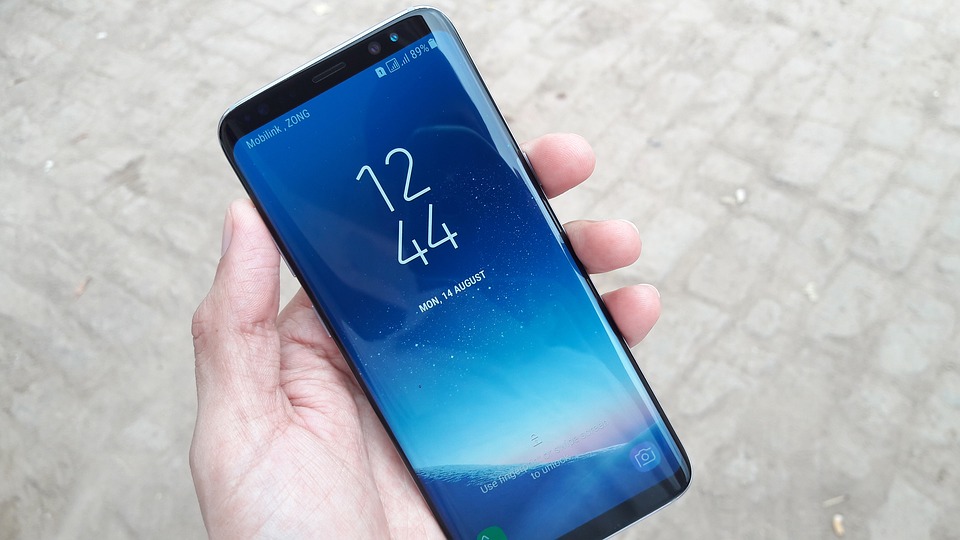
On 18 January 2018, the General Court of the European Union (GC) upheld the decision of the Board of Appeal in the case T-804/16. LG´s application for the EU word mark “Dual Edge” was found to lack distinctive character and was therefore refused to be registered by the EUIPO.
Samsung Galaxy S8, Source: Pixabay
On 12 August 2015, LG Electronics Inc., a South Korean company producing consumer electronics, filed an application for registration of the EU word trademark for the sign “Dual Edge” for all goods in class 9 of the Nice Agreement. The application No 014463178 was rejected by the EUIPO for all class 9 goods except for “portable mobile phone chargers, headphones, earphones, wireless headphones”. For all other goods, the word trademark was found descriptive and lacking any distinctive character on the basis of Article 7 (1) (b) and (c) and Article 7 (2) of Regulation No 207/2009 (now Regulation No 2017/1001).
On 6 March 2016, LG appealed against this decision to the Second Board of Appeal at the EUIPO (BoA). LG argued that the trademark consists of words that are newly coined and invented. The sign as a whole cannot be found in any dictionary and therefore it possesses a distinctive character. Nevertheless, the BoA did not agree with the above mentioned arguments and dismissed the appeal. The main argument of the BoA was based upon the evidence of use in the market. The relevant public links the sought for trademark and one of the most significant characteristics of such goods, namely that the screen is inserted along the edges of the mobile phone device. Furthermore, the term was seen as descriptive.
LG then filed an appeal to the next instance, the GC. Even though the applicant claimed that the trademark does not refer to a screen and therefore does not describe the characteristic of the good, the Court upheld the decision of the BoA. The Court agreed with the previous instances and found the trademark to be descriptive and therefore not able to be registered.
As the matter of interest, also another South Korean company, Samsung, has tried to register the same trademark for goods in class 9. But after a while, maybe realising the problematic point, Samsung withdrew its application and instead filed an application for the word mark “SAMSUNG DUAL EDGE”. On 6 July 2015, the EUIPO successfully registered it under the No. 013808308.
On 18 January 2018, the Intellectual Property Office of the European Union (EUIPO) published its opinion paper answering the most burning questions concerning the impact of the UK´s withdrawal from the EU regarding EU Trademarks and EU Designs.
Source: Pixabay
The EUIPO raises in 29 questions and answers the consequences on intellectual property law in case of a “hard Brexit”. A hard Brexit would lead to the situation that after the withdrawal date no EU rules about trademarks and designs would be applicable in the United Kingdom. Although there is a possibility that some bilateral or unilateral agreements might be closed in the future, up to date the final consequences of the Brexit are unclear as the negotiations are still in process. Therefore, the position paper is only based on the current status (18 January 2018) and does not consider any future arrangements.
In the statement, the EUIPO answered questions concerning following ten main fields:
- ownership of the EU Trademarks (EUTM)
- scope of protection of the EUTM
- maintenance of rights conferred to the EUTM
- capacity to act and representation before the EUIPO
- English language in the proceedings before the EUIPO
- priority and seniority claims
- absolute grounds of refusal and invalidity
- relative grounds of refusal and invalidity
- revocation for non-use
- EU Designs
For a better insight on this topic, read the whole paper here or our previous articles about the position papers on Brexit published by European Commission and MARQUES.
On 20 December 2017, the Court of Justice of the European Union (CJEU) gave its opinion on the “Champagner Sorbet” case. The Court stated the conditions of using the Protected Designation of Origin (PDO) for “Champagne” on a product which only contained 12% of Champagne.

Source: Pixabay
Background of the case:
In 2012, Aldi Süd Dienstleistungs-GmbH & Co. OHG, a German discounter supermarket chain, had started to sell a frozen product under the name “Champagner Sorbet” which contained 12% of Champagne. An association of champagne producers, Comité Inteprofessionnel du Vin de Champagne (CIPV), brought proceedings before the Regional Court in Munich I. against this use. The plaintiff requested an injunction prohibiting Aldi from further usage of the PDO “Champagne” for the sorbet products. CIPV claimed the infringement of the PDO for exploitation of the reputation, misuse, false and misleading indication concerning such PDO on the basis of Article 118m of Regulation No 1234/2007 and Article 103 of Regulation No 1308/2013.
The plaintiff, CIPV, succeeded in the first instance. However, the second instance, the Higher Regional Court in Munich came to the opposite conclusion and dismissed the application of CIPV. The appeal court stated that the conditions for declaring infringement were not fulfilled as Aldi has a “legitimate interest in using the name “Champagner Sorbet” to refer to a food product known to the public under that name and in which champagne was an essential ingredient”. On that account there was no misleading indication.
CIPV then lodged an appeal on a point of law before the Federal Court of Justice (BGH). The BGH stayed the proceedings and referred the case to the CJEU for a preliminary ruling. The CJEU had to clarify the conditions under which it would be in compliance with the law for the producer to use the PDO term Champagne for products that are not Champagne but only contain some percentage of it.
The CJEU held that an unlawful exploitation is to be understood as usage of the protected PDO in order to take an undue advantage of its reputation. The Court then stated that the product can only use the PDO Champagne in its name when two conditions are fulfilled. Firstly, the product has to really contain Champagne and secondly, the taste of the product has to be attributable to Champagne as one of its essential features. CJEU then stressed that although the quantity of Champagne in the sorbet might be significant; in itself it is not determinative enough to state an undue advantage. Therefore, the consideration has to always depend on the evidence at hand.
Now, the case is back at the BGH which has to decide whether Aldi fulfilled all above mentioned requirements stated by CJEU for a lawful usage of the name “Champagner Sorbet”.
For more information read the whole CJEU decision here.
On 20 December 2017, the Court of Appeal in Sweden sentenced some of the scammers from the Uppsala trademark scam case to serve a prison sentence. They were found guilty of fraud for sending misleading invoices to EU trademark owners using the name “OMIH” on the letterhead.

Source: Pixabay
The Uppsala trademark case involves more than 20 persons. They were sending fraudulent invoices to EU trademark holders using the letterhead “OMIH”. Many of the recipients made the payments, convinced that the invoices were sent by the real EU Trademark Office OHIM (now EUIPO).
In the criminal trial, the first instance found some of the involved fraudsters guilty for attempted fraud and gave them prison sentences. Against this decision, the Swedish prosecutor appealed to the Court of Appeal. On 20 December 2017, the Court changed the criminal classification for the two ringleaders from attempted fraud to complete gross fraud.
The Court also approved the claims for damages for those aggrieved ones, who had made the payments on the basis of the fraudulent invoices.
To gain a better insight on this topic, read the summary of the judgment written by the EUIPO here.
On 11 January 2018, Melchior Wathelet, the Advocate General of the Court of Justice of the European Union (CJEU), published his opinion about the dispute concerning the Neuschwanstein EU trademark. In his opinion, he recommended the CJEU to uphold the previous decision of the General Court. Wathelet states that the trademark is not descriptive for the goods and services covered and therefore there is no legal barrier for its registration.
[[{"type":"media","fid":"4844","view_mode":"default","instance_fields":"override","attributes":{"height":675,"width":960,"style":"width: 800px; height: 400px;"},"field_file_image_alt_text[und][0][value]":"Neuschwanstein - European Trademark","field_file_image_title_text[und][0][value]":"Neuschwanstein - can the famous German castel be protected as an EU Trademark?"}]]
Source: Pixabay
Background of the case:
Neuschwanstein is a castle which was built from 1869 to 1886 during the reign of the King Ludwig II of Bavaria. Because of its appearance, the castle is often compared to a fairy tale castle which was for example also an inspiration for the castle in the original Disney version of the Sleeping and the Beauty. The castle is a major tourist attraction and therefore commercially very successful. The owner, the Bavarian State, decided to regulate the souvenir industry and filed an application for registration of a German national word trademark and later also a registration of an EU word trademark. The German national trademark was registered on 4 October 2005 under the number 30544198, the EU trademark then on 12 December 2011 under the number 10144392.
Against both of these applications for registration, the German Federal Association (Bundesverband Souvenir Geschenke Ehrenpreise e.V. - BSGE) filed invalidity applications. BSGE, a trademark network of souvenir producers, argued that the registration of the above mentioned trademarks would lead to censorship of the Neuschwanstein souvenir trade. Nevertheless, BSGE was only successful in cancelling the German national trademark. On the European level, the EU trademark so far was seen as complying with all requirements set forth in the Regulation 207/2009. Now in the last instance, the CJEU, is about to state its final view and render a decision on this case.
Background of the German national trademark case:
Before taking a closer look on the current European case, here is a brief summary of the fate of the German national trademark.
The sign “Neuschwanstein” was registered as a German national trademark on 4 October 2005 under the number 30544198. On 14 January 2008, BSGE filed an application of invalidity according to Article 8 (2) No. 1 of German Trademark Act. The German Patent and Trademark Office (DPMA) agreed with the argumentation of the applicant and ordered cancellation of the trademark for lack of distinctive character. The trademark owner, the State of Bavaria, tried to reverse the verdict and filed a notice of appeal, which remained unsuccessful. Nevertheless, the dispute continued to the next instance – to German Federal Patent Court (BPatG). On 4 February 2011 the BPatG decided in compliance with the previous decisions about the invalidity of the concerned trademark. The trademark owner then filed an appeal to the final possible instance – to German Federal Court of Justice (BGH). The Court stated in his decision from 8 March 2012 that according to Article 8 (2) No. 1 of German Trademark Act souvenir goods do not possess distinctive character. The Court then explained that the sign “Neuschwanstein” was establishing a link to a sightseeing destination and so to be understood as a sign indicating geographical origin for the souvenir goods. As a result of above mentioned arguments, the German national trademark was declared to be invalid. For a better insight into this decision, read here.
Background of the European trademark case:
On 22 July 2011 the Bavarian State filed an application for registration of the sign “Neuschwanstein” as an EU word trademark, which was later, on 12 December 2011, registered under the number 10144392. On 10 February 2012 the BSGE filed an application of invalidity according to Article 7 (1) b) and c) of Regulation 207/2009 (EUTMR). On 21 October 2013 the application was rejected by the Cancellation Division of EUIPO. The Cancellation Division stated that the “EU trademark did not consist of indication which may serve to designate the geographical origin” and therefore the trademark did not breach the Article 7 (1) c) of EUTMR. It also did not breach requirements of Article 7 (1) b) EUTMR because the trademark is to be considered distinctive in respect of the goods and services in question.
The dispute continued to the next instance when the BSGE filed notice of appeal with EUIPO. Nevertheless, on 22 January 2015 the Board of Appeal (BoA) dismissed this appeal and confirmed the previous decision of the Cancellation Division. The BoA found the trademark not indicative of geographical origin and not devoid of the distinctive character, too. In addition, the BoA stated that the Bavarian State government was not in bad faith in view of the purpose of Article 52 (1) b) EUTMR.
The BSGE then brought an action for annulment of the BoA decision before the General Court. But, on 5 July 2016, the applicant´s pleas were again dismissed when the General Court did not find any arguments for declaring the trademark as invalid. In the opinion of the Court, the sign “Neuschwanstein” fulfilled all requirements under the EUTMR. The sign was seen as referring to the castle as a museum location and as the castle is not a place where the goods or services are manufacutred, it also cannot be seen as a reference to the geographical origin of the products. In addition, the trademark is a fantasy name and therefore it lacks a descriptive connection with the offered goods and services.
Now, the CJEU, the final instance, will decide about the faith of this EU trademark. On 11 January 2018, the Advocate General Wathelet already published his opinion. As the previous instances, Wathelet pointed out that the trademark was not indicative of the geographical origin of the registered goods and services as those were merely marketed at the castle and furthermore could equally be marketed anywhere else. The Advocate General then also mentioned his definition of souvenir goods when describing them as “items that recall a person, place or event, they are items evoking emotions. And, human emotions cannot be covered by an EU trade mark”. Therefore they have to be understood as everyday goods. As a result, the Advocate General recommended the CJEU to uphold the General Court´s decision. For more information read here.
At the moment it is questionable, whether the Court will decide in compliance with the above outlined AG recommendation or will side with the point of view of the German Federal Court of Justice.
The new year brought some changes at WIPO and the EUIPO which are taking effect on 1 January 2018. Here is a brief summary of the most important ones for all trademark practitioners.

Source: Pixabay
Madrid Monitor
WIPO has announced that from the beginning of the year 2018 there is going to be only one tool for monitoring the status of international trademark applications and registrations under the Madrid System – namely Madrid Monitor. The other tools, such as ROMARIN, Madrid e-Alert or Madrid Realtime Status are no longer online. Madrid Monitor now has new features and will integrate all the functions of the before mentioned discontinued tools. For more details read here.
Nice Classification
WIPO has also published the 11th edition of the Nice Classification that came into force on 1 January 2018. The 11th edition of the Nice Classification can be found here.
Faxes at EUIPO
As of 1 January 2018 EUIPO will no longer accept faxes for filling EUTM applications. For more details read here.