

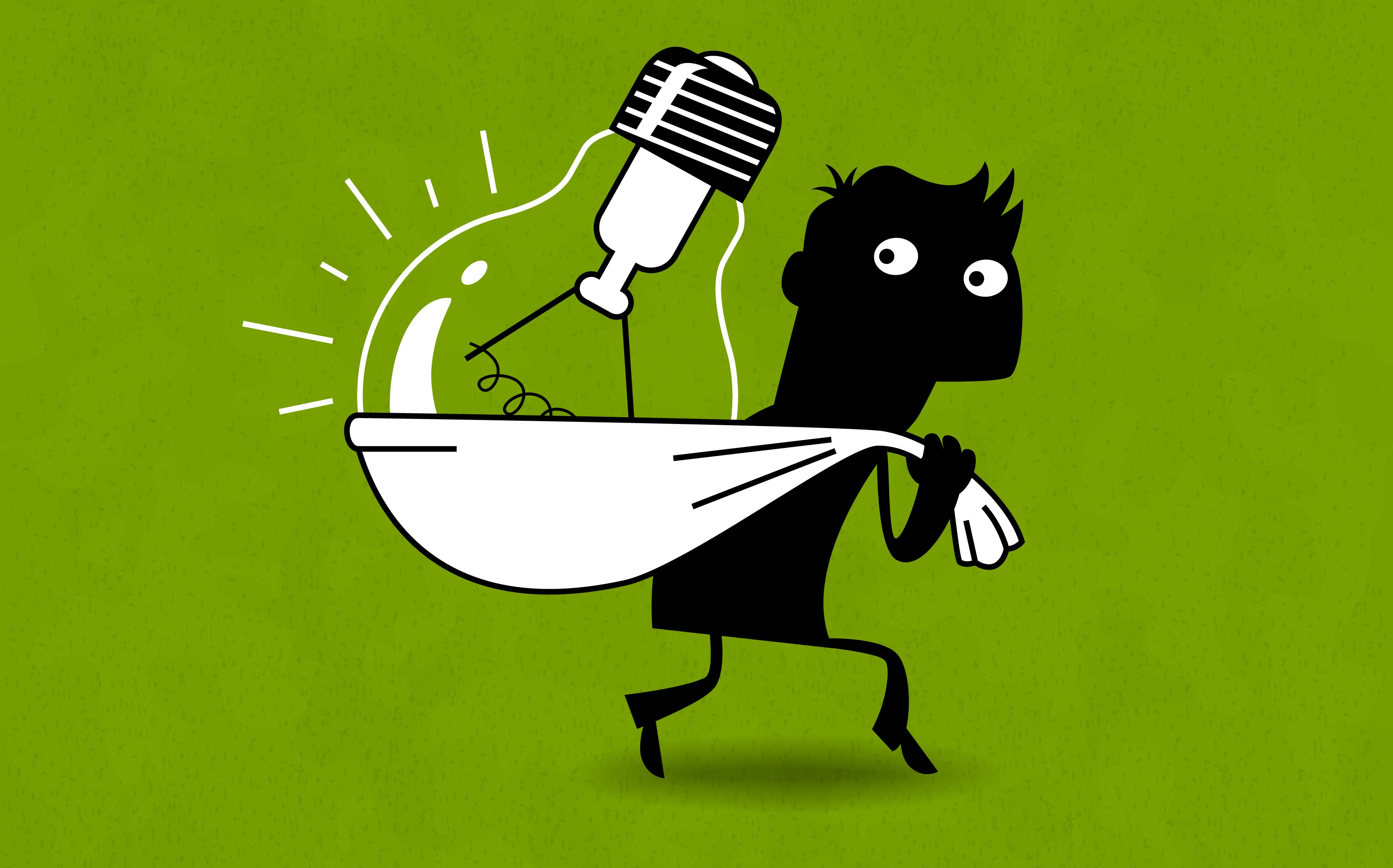
Christmas is only a few weeks away! Now is the time for including gifts for your loved ones to your shopping lists. But as you browse through busy stores or infinite lists of products online looking for bargains, do not let the sweet vapours of mulled wine dull your senses. As the EUIPO and EUROPOL recently highlighted in a joint report published on 23 October 2024 on the ecosystem of Intellectual Property (IP) crime, counterfeit goods keep finding their way to our shelves and represent a staggering 5.8% of EU trade. The report sheds light on how much IP crime remains a threat to European consumers, how it is enabled, and how its impact could be mitigated.
- The scale of the threat
According to EUROPOL and the EUIPO, IP crime can be defined as “theft, infringement and unauthorised use of intellectual property”. Criminal activity of this nature is not new and seems to be flourishing to this day: during the year 2022 alone, an estimated 86 million items infringing intellectual property rights were seized on EU territory for an overall value of over EUR 2 billion. Toys, cigarettes and DVDs were the most commonly seized items, but cosmetics, food products, pharmaceuticals and virtually every other category of goods is concerned. As a result, IP crime represents a serious risk both for consumers’ health and for the EU’s economy as a whole.
Disturbing examples according to the report:
- Counterfeit tobacco products worth EUR 17 Million were seized in France alone
- 260,000 litres of counterfeit olive oil were seized, unfit for consumption and posing a public health risk
- A Chinese money-laundering network was able to smuggle EUR 1 Million daily with proceeds from counterfeit goods trafficking
- Banned pesticides were smuggled and used in protected areas, putting the environment and public health at risk
- Key findings and ideas
Interestingly, despite the potential health hazards of counterfeit goods, the report identifies the consumers’ own behaviour as one of the main drivers of the development of IP crime in the EU, if not the most important one. Consumer demand for low-priced items is currently high, due in part to the ongoing trend of the cost of living steadily increasing. Widespread access to internet, frequent use of social media and the rise of online influencers act as a catalyst to the sale of IP-infringing items by facilitating the coming together of consumers in search of cheap products and those in a position to offer them. As an example, a clandestine laboratory confectioning illegal anabolic steroids was dismantled in 2023, after social media influencers in Romania with popular dietary and nutrition channels promoted the drugs directly to their communities.
On the “sellers’” side, IP crime is now mostly driven by large, professional criminal networks operating not only in the EU, but on a global scale. Ingenious ways of acquiring, smuggling, transporting and retailing IP-infringing products are conceived in all parts of the world and implemented by groups with experience in other criminal activities, such as the forging of false documents (for instance, fake certificates to deceive consumers as to the origin of the goods to the detriment of Geographical Indication holders) or money laundering. Here too, innovation allows for profit, as cryptocurrencies are frequently used as means of payment for counterfeit commodities. To make matters even more complex for law enforcement authorities, real, legal instruments are abused to give criminal enterprises the appearance of legitimacy.
Overall, the report concludes that more law enforcement and judicial action is warranted in the fight against IP crime. Even more importantly, raising awareness of the general public to the dangers of IP crime and the sheer scale of the problem is a priority, as understanding and mitigating risks associated with counterfeit purchases is crucial for our wellbeing. So, if Santa Claus reads this, please be careful about what you put under the Christmas tree this year.
- Useful links
For more information on the EUROPOL and EUIPO report, please visit the following links:
Understanding Trademark Law Through the Lens of Halloween: A Spooky Guide
Halloween, with its pumpkins, costumes, and haunted houses, is one of the most exciting and creative times of the year. But behind the spooky masks and candy bowls lies a complex world of Intellectual Property Law, especially trademarks, which many businesses need to navigate carefully during the season. 
The holiday is an ideal opportunity for businesses to launch special Halloween-themed products, from limited-edition packaging to pop-up stores. But as companies jump on the Halloween bandwagon, they must be wary of the legal risks lurking in the shadows – particularly when it comes to trademark law. Whether you’re a small business creating custom merchandise or a larger company launching a seasonal marketing campaign, understanding how trademark law applies during Halloween can save you from a legal nightmare.
What is a Trademark?
As you may know, a trademark is any word, phrase, symbol, or design that identifies and distinguishes the origin of goods or services of one party from those of others. For businesses, trademarks are essential assets that protect brand identity and consumer trust. They give companies the exclusive right to use a particular trademark in commerce, preventing competitors from using an identical or similar sign.
In the context of Halloween, think of famous symbols like the “Jack-o’-lantern” or phrases like “Trick or Treat.” While some generic symbols or phrases cannot be trademarked because they are widely used, unique designs or logos related to Halloween can be (and have been) registered as trademarks if they meet the legal requirements.
Halloween and Popular Trademarks
Halloween offers a wealth of creative opportunities for businesses, but it also carries the risk of unintentionally infringing on someone else’s trademark. For example, some popular costumes or merchandise inspired by movies, TV shows, and famous characters – such as Frankenstein’s monster, vampires, or superheroes – are often protected by trademarks or other intellectual property rights. Trademarks containing the term “HALLOWEEN” are protected via several EU trademarks for various goods and services (e.g. EU 000152512 “HALLOWEEN” for goods in class 3, EU 007101785 “HAPPY HALLOWEEN” for goods in class 30, EU 009220765 “A WHOLE LOT OF HALLOWEEN” for goods in classes 14, 16, 18, 20, 21, 24, 25, 26, 28).
A well-known example of a Halloween-related trademark battle is between Disney and smaller retailers. Disney has aggressively protected its trademarks, particularly around its Halloween-themed characters like Jack Skellington from The Nightmare Before Christmas. While businesses may be tempted to create costumes, decorations, or merchandise inspired by these beloved characters, they risk facing legal action from Disney if they don’t have the proper licensing agreements.
For businesses selling Halloween-themed products or costumes, it is critical to check whether the designs or names you’re using are already protected by someone else’s trademark. Ignoring this step could lead to costly lawsuits or cease-and-desist letters. For example, creating a product that uses the iconic silhouette of a famous Halloween character without permission can easily result in trademark infringement claims.
Don’t Let Trademark Law Haunt You
If your company plans to create a unique Halloween product or event, securing trademark protection can be a valuable strategy. Registering your Halloween-themed name, logo, or product design with the appropriate trademark office ensures that you have the legal rights to prevent others from using a similar mark. This not only protects your business but also strengthens your brand’s identity in the marketplace.
Before launching your product, conduct a thorough trademark search to ensure that your Halloween ideas don’t overlap with existing trademarks.
Halloween is a time for fun, creativity, and innovation, but businesses need to be mindful of trademark laws to avoid potential legal pitfalls. Whether you’re marketing a new spooky treat, hosting a Halloween-themed event, or designing merchandise, make sure you protect your intellectual property and respect the rights of others.
Happy Halloween – and stay legally safe! LexDellmeier will be happy to advise and support your company on questions of trademark law. Please feel free to contact us under info@lexdellmeier.com.
(Photo Source: Shutterstock Photo ID 2536795353)
If you are the owner of a registered patent, trademark or design (IP rights), you have surely received communication in the past that looked like it was an invoice coming from an official source, that mentioned the correct registration number of your IP right and that made you assume that you needed to pay this invoice to uphold your IP right. NEVER pay such “invoice” unless you have made sure that it is genuine.

Background
As IP attorneys, we regularly receive emails from clients forwarding letters that they received by mail asking us whether or not those letters are genuine and what they need to do.
Usually, if you register an IP right through patent attorneys or lawyers, the law firm will take care of all administrative measures that are necessary to uphold your rights. The firm will, in particular, monitor the renewal deadline for the IP right and remind you well in advance that and when payment is due. Any official reminder sent by an Intellectual Property Office will be sent to the registered representative of your IP right, but not to you as the owner.
If you directly receive communication and it looks like an invoice, it usually is spam and only intended to rip you off. Somebody not officially associated with an Intellectual Property Office is sending you the letter “offering” to renew your IP right, but the wording of the “offer” is so small that it is overlooked and people get the impression from the overall look of the letter, that it is an invoice that must be paid to avoid the expiry of a patent, trademark or design.
Upon receipt of such letter, a lot of people simply pay. And they pay a lot more than actually needed or they pay for services absolutely unnecessary.
Overall, these misleading invoices are very annoying and the Intellectual Property Offices have been warning about them for a long time.
Recent Decision By German Criminal Court
Recently, the European Union Intellectual Property Office (EUIPO) published information on its website about a German court decision issued in September 2024. The criminal court in Munich – based on a criminal complaint for suspected fraud filed by the EUIPO in December 2020 – found three defendants guilty of commercial gang fraud for sending misleading invoices to EUIPO customers. Each of the defendants was sentenced to 22 months' imprisonment, suspended on probation for three years. In addition, the court confiscated an amount of approximately EUR 200,000 which the defendants had unlawfully obtained with their “invoices”.
According to information from the EUIPO, this was only the second time that misleading invoices were deemed a criminal offence and were qualified as fraud by a criminal court in an EU Member State. The only other decision had been taken in Sweden in 2017 where the defendants were convicted of gross fraud.
Recommended Behavior
Based on the information above and to not become a victim of fraud, we strongly recommend that you do not pay any “invoice” that you receive in an IP matter unless you have clarified with the Intellectual Property Office or with an IP attorney that the invoice is genuine. For an initial check, you can refer to the list of scam letters and emails published by the EUIPO on the misleading invoices section on its website.
Should you have any questions or if you would like to know if an “invoice” that you received is genuine and should be paid to avoid the expiry of your IP right, you are welcome to contact us by email at info@lexdellmeier.com or by phone at 089 55 879 870.
Upon examining trademark applications, national trademark offices in the EU may refuse to register a sign that is contrary to “public policy” or “accepted principles of morality”. This somewhat lesser-known absolute ground of refusal of registration is provided for by Article 4(1)(f) of the Trade Mark Directive (EU) 2015/2436 (TMD). In an effort to further harmonise the practices of the Member States’ Intellectual Property Offices, the EU Intellectual Property Network has issued a dedicated “Common Practice” to provide more clarity on this ground of refusal to the national Intellectual Property Offices.
- What is a “Common Practice”?
Examination procedures of EU Trademark and Design applications are famously described in detail in the EUIPO’s Guidelines. At a national level, the EU Intellectual Property Network brings together the EUIPO with the national and regional IP Offices of the EU to develop common examination standards and practices in all IP matters. This effort includes the establishment of Common Practices aimed at providing guidance to the national IP Offices, in particular with regard to the examination of trademark applications.
- New guiding principles on Article 4(1)(f) TMD
As of 19 July 2024, Common Practice 14 was implemented by all national IP Offices in the EU. The objective is not to impose a certain view on what is or should be seen as lawful in each EU Member State, but rather to facilitate a common understanding of the concepts of public policy and accepted principles of morality, as well as define common criteria for assessing Article 4(1)(f) TMD.
According to the new Common Practice, the contours of both concepts may vary from Member State to Member State and evolve over time. But overall, “Public policy” consists in a set of fundamental norms, principles and values of societies in the EU at a given point in time. This includes the universal values of the EU laid down in the Treaty of Lisbon of 13 December 2007. “Accepted principles of morality” refer to the fundamental moral values and standards accepted by the society in the EU at a given time. Thus, the former derives from reliable, objective sources such as EU legislation or case law, while the latter implies an empirical assessment of what the acceptable norms of conduct are in a given society at a given time (which corresponds for instance to religious, cultural or social standards).
As for the assessment of the trademark application against the ground of refusal, IP Offices need to proceed on a case-by-case basis considering the normal level of sensitivity and tolerance of the relevant public as well as the circumstances specific to the Member State concerned. All possible meanings of the examined sign must be identified and analysed. Then, Offices will determine whether the goods and services and the context in which they will be offered may accentuate or mitigate the objectionable meaning of the sign: as an example, registering “Kill them all” for insecticides would be acceptable, but not for daycare services for babies. CP14 also includes a reminder of the established EU case law whereby freedom of expression should be taken into account in the assessment of the sign, although no guidance is provided as to how this should be done.
- Useful links
For more information on CP14, please visit the following links:
https://www.euipo.europa.eu/es/news/publication-and-implementation-of-cp14
State-of-the-art IP management in the year 2024 requires in-depth expertise and an outstanding cloud- and AI-based software. As an interdisciplinary team of lawyers and patent attorneys as well as computer scientists, engineers and physicists, the IP firm LexDellmeier - www.lexdellmeier.com - and the German-based software company IP Servant GmbH - https://www.ip-servant.com - helps
[[{"type":"media","fid":"5509","view_mode":"default","instance_fields":"override","attributes":{"style":"width: 500px; height: 281px;"},"field_file_image_alt_text[und][0][value]":"ld_banner_webinar_linkedin_1280x720_ev2_neu.png","field_file_image_title_text[und][0][value]":"Webinar Intellectual (IP) Software and IP Management"}]]
- your IP department in the company or
- your IP law firm
with the strategic planning and implementation with respect to
- the digitalization of your files,
- the introduction or improvement of processes & workflows
- the implementation of the cloud- and AI-based IP software “IP Servant”
as well as training your employees with the aim of
- cost savings (including staff),
- increasing efficiency and
- the reduction of errors.
The Munich law firm LexDellmeier - Intellectual Property Law Firm - www.lexdellmeier.com - together with the German-based software company IP Servant GmbH - https://www.ip-servant.com/ - offers know-how and expertise based on almost 40 years of experience and use of the IP software “IP Servant” in companies and law firms.In the past two years we have set up five firms and companies and imported approx. 19,000 files and intellectual property rights.
Whether you are just starting out or want to switch from an existing software - we stay at your disposal. Please feel free to contact us at any time.
In case of interest, please feel free to participate in one of our 60-minute free webinars showing how to manage trademarks, designs, utility models, patents etc.
Please note that the WEBINARS will be held in GERMAN at this point in time.
WEBINAR DATES (in German):
- DIENSTAG, 15. Oktober 2024, 10.00 – 11.00 Uhr
Link zur Anmeldung auf Eventbrite
Titel: „IP Software und IP Management“
- DIENSTAG, 26. November 2024, 15.00 – 16.00 Uhr
Link zur Anmeldung auf Eventbrite
Titel: „IP Software und IP Management
AGENDA der Webinare:
- Vorstellung Software „IP Servant“ (Cloud und KI-basiert) & Kanzlei LexDellmeier
- Übersicht & Hauptfunktionen der IP Software (Cloud und KI-basiert)
- Bedeutung, Kosten- und Zeitersparnis bei zielführendem IP Management
Fokus: Verwendung im Unternehmen / IP Abteilung
- LIVE Demo: Rollen & Berechtigungen – einfache Handhabung
- Übersicht Portfolios (Marken, Designs, Gebrauchsmuster, Patente)
- LIVE Demo: Akten- und Fristenverwaltung / Korrespondenz
Fokus: Verwendung in der Kanzlei
- LIVE Demo: Benchmarking, Aktenanlage, Zeiterfassung, Rechnungsstellung
Fokus: Kombination: Externes IP Management durch externe Kanzlei LexDellmeier
- LIVE Demo: Datenexport und -import (Portfolios, Fristen, etc.)
- LIVE Demo: Komplett outgesourctes IP-Management und Mandanten-Zugriff
- Schnittstellen
- Künstliche Intelligenz (KI)
- DATEV
- PAVIS
- DPMA, EPA, etc.
- Software IP Servant - Preismodell/Pakete/30 Tage kostenlos testen
- Fragerunde
LEXDELLMEIER WEBINAR ON AMENDMENTS TO EU DESIGN LAW
Are you the owner of a registered design in the European Union and have your design protected products been copied by way of 3D printing with you not being able to proceed against the person selling the 3D printing software? Or have your design protected goods been shown in the metaverse with you not being able to take action against such use for lack of “physical embodiment”? Then we have good news for you. A new EU-Design Directive as well as a new EU-Design Regulation will soon come into force and will extend design protection beyond physical objects. For more information, you are welcome to attend our webinar on 9 October 2024 at 4.00 pm (CEST). Get an overview of the webinar’s agenda by reading our newest blog article.

- Background
Design law in the European Union had not been updated for over 20 years. For about the last 10 years, reviews and consultations had been conducted between the different stakeholders to determine and discuss the necessity and extent of changes to the EU design law system. In March 2024, the EU parliament finally adopted a new Design Regulation and Directive to be published in the Official Journal shortly. The Regulation will come into effect 4 months after publication and regarding the Directive, the EU member states will have 3 years (36 months) to implement it into national law.
- Agenda of LexDellmeier Webinar
LexDellmeier IP Law Firm will hold a one-hour webinar on
9 October 2024 at 5.00 pm (CEST)
to present and discuss the new amendments in detail. We will discuss
- The broadening of the scope of design protection by new definitions of the terms “design” and “product”;
- The addition of new acts of infringement to give design owners better coverage in proceeding against infringements;
- The new repair clause which is particularly intended to increase competition in the spare parts market;
- Changes in general terminology which align EU design law with EU trademark law;
- The waiver of the "one (Locarno) class" requirement;
- The adoption of a new design protection symbol consisting of a D in a circle like the C for copyrights and the R for registered trademarks; and finally
- Changes in the official fees that the new Regulation will implement and how it can influence your application strategy.
Come and join us at our Zoom webinar on 9 October 2024 at 4.00 pm (CEST). The webinar is free of charge and you can easily register via Eventbrite or send an email to us at: info@lexdellmeier.com We look forward to seeing you at the webinar!
Should you not be able to attend the webinar, you are welcome to contact us at any time for further information on the new EU design law, either by email to info@lexdellmeier.com or by phone at +49 89 55 879 870.
The Olympic Games 2024 are underway! However, although the merriment surrounding the event invites to light-heartedness, one should be careful not to be carried away when it comes to the use of the so-called “Olympic Properties”. The International Olympic Committee (IOC) and its affiliated entities tend to defend their IP rights fiercely against infringers, which is why businesses should be aware of the following.
[[{"type":"media","fid":"5497","view_mode":"default","instance_fields":"override","attributes":{"style":"height: 309px; width: 550px;"},"field_file_image_alt_text[und][0][value]":"olympic_athlete.jpeg","field_file_image_title_text[und][0][value]":"olympic_athlete.jpeg"}]]
- What are Olympic Properties ?
The Olympic Charter is the result of the IOC’s efforts to organise the Olympic movement and codifies all principles, rules and by-laws pertaining to the Olympic Games. In its Rule 7, the Charter reserves all rights relating to the symbol, flag, motto (“Citius, Altius, Fortius”), anthem, identifications (including the terms “Olympic Games” and “Games of the Olympiad”), as well as any musical, audiovisual or creative works exclusively to the IOC, covering a broad range of different objects.
Many of the objects defined as Olympic Properties enjoy protection through traditional IP rights such as trademarks, designs or copyright. The IOC allows certain third parties to make use of its IP rights protecting Olympic properties through licensing agreements as part of the Olympic Partners Program such as Coca-Cola, LVMH or Samsung. However, any use of the IOC’s trademarks, designs or other IP rights by an unauthorized third party constitutes an infringement.
- A specific protection in national French law
Apart from “regular” IP rights, the Olympic Properties benefit from specific protections as such in many countries. For instance, the Nairobi Treaty of 1981 provides that each contracting party (56 countries as of 2023) is obliged to refuse or invalidate the registration of a mark and to prohibit the use for commercial purposes of any sign consisting of or containing the Olympic symbol without the IOC’s authorisation.
In this spirit, the French lawmaker has provided a series of new rules in the French Sports Law (Code du Sport), whereby the French National Olympics and Sports Committee (CNOSF) is the sole owner of the national Olympic emblems as well as the sole custodian on the French territory of many of the IOC’s Olympic Properties. As a special measure, the Organisation Committee for the Olympics and Paralympics (COJOP) is the only entity authorized to file an action against infringements to the new rules committed between 1 January 2019 and 31 December 2024, with the CNOSF only being able to join the proceedings to seek compensation for its own damages. With these new rules, any third party registering as a trademark, reproducing, imitating, affixing, deleting or modifying the elements and terms enjoying the new specific protection without due authorisation from the CNOSF is deemed to infringe against the CNOSF’s rights and is liable to the same criminal sentences as those provided for in trademark infringement matters by the French Intellectual Property law (Code de la Propriété Intellectuelle). These range between three and seven years imprisonment and between EUR 300.000 and EUR 700.000 fines depending on the nature of the infringement. However, contrary to trademarks, Olympic Properties enjoy absolute protection, as there is no need for the COJOP / CNOSF to prove the existence of a prior IP right or of a likelihood of confusion between the Olympic Property concerned and the infringing sign. It is worth noting that these rules do not compel the French Trademark Office to refuse trademark applications for signs that resemble an Olympic Property – attempting to register such a sign without authorisation may only give cause to a civil lawsuit before the competent civil law court.
- Useful links
For more information on Olympic Properties and their protection, please visit the following links:
https://olympics.com/ioc/olympic-properties
https://stillmed.olympics.com/media/Document%20Library/OlympicOrg/General/EN-Olympic-Charter.pdf
https://cnosf.franceolympique.com/les-proprietes-olympiques (in French)
In the cutthroat world of advertising, the temptation to proclaim superiority over competitors is ever-present. Whether it is claiming to be “Europe’s Number One” or touting oneself as simply “the best,” such declarations can be powerful tools for brand promotion. However, beneath the surface lies a legal minefield that companies must tread carefully to avoid running afoul of competition law.[[{"type":"media","fid":"5484","view_mode":"default","instance_fields":"override","attributes":{"style":"width: 400px; height: 281px;"},"field_file_image_alt_text[und][0][value]":"Europes Number One","field_file_image_title_text[und][0][value]":"Europes Number One"}]]
The crux of the issue lies in the potential for such claims to mislead consumers and distort market competition. While it is natural for companies to want to highlight their strengths and unique selling points, competition law sets strict parameters on the validity and veracity of such assertions.
One of the key principles of competition law is the prohibition of false or misleading advertising. When a company declares itself as “the best” without sufficient evidence or context, it risks misleading consumers into making decisions based on inaccurate information. Such practices not only undermine consumer trust but also create an uneven playing field by unfairly disadvantaging competitors who may offer comparable or superior goods or services.
Moreover, claims of supremacy can also raise concerns under competition law regarding unfair competition practices. By positioning oneself as unequivocally superior to competitors without proper substantiation, companies may engage in deceptive advertising tactics that violate the principles of fair play and market integrity.
In response to these challenges, competition authorities closely scrutinize advertising claims of superiority to ensure compliance with legal standards. Companies must be prepared to substantiate such claims with objective evidence, such as market share data, customer satisfaction surveys, or independent evaluations, to demonstrate the validity of their assertions.
Furthermore, comparative advertising, where companies directly pit themselves against competitors, must be executed with caution to avoid disparaging rivals or making false comparisons. Competition laws require comparative claims to be accurate, verifiable, and not unfairly denigrating to competitors, ensuring a level playing field for all market participants.
In conclusion, while it is natural for companies to want to assert their dominance in the market through advertising, they must do so within the confines of competition law. By ensuring that claims of superiority are backed by credible evidence and are not misleading to consumers, businesses can effectively navigate the legal complexities of advertising while maintaining integrity and fair competition in the marketplace. Remember, in the realm of advertising, honesty and transparency are the cornerstones of sustainable success.
LexDellmeier will be happy to advise and support your company on questions of competition law, including comparative advertising. Please feel free to contact us under info@lexdellmeier.com.
On May 1, 2009 LexDellmeier was founded! Incredible that 15 years have gone by. Therefore, it is time to briefly comment and appreciate these past years and our #amazingjourney.
[[{"type":"media","fid":"5483","view_mode":"default","instance_fields":"override","attributes":{"style":"width: 500px; height: 248px;"},"field_file_image_alt_text[und][0][value]":"LexDellmeier_15_Year_Anniversary","field_file_image_title_text[und][0][value]":"LexDellmeier_15_Year_Anniversary"}]]
Thank you to…
- Fantastic clients in Germany, France, Spain & other EU countries, UK, Switzerland, USA, Canada, China, Japan, Brazil, Argentina, Australia and from everywhere around the world – thank you all for entrusting #lexdellmeier
- Outstanding and longstanding IP team including members who have worked at LexDellmeier for all of these 15 years – thank you for serving our clients and doing a great job every day
Noteworthy
- LexDellmeier has achieved an #award in either the category “Trademark Law Firm of the Year” or “Small IP Law IP Firm of the Year” – every year in a row since 2010 – see https://lexdellmeier.com/de/awards
- The firm is – as one of the few IP firms – still female owned and run
Achievements in the past 15 years
- Organic growth of approx. 500%
- State of the art Management IP System with client access to full files, reports, export of trademark & design portfolios, (renewal) deadlines etc.
Outlook and Goals
- Continue our work with #PASSION and JOY and HAVE FUN
- Continue to strive to be one of the most knowledgeable, successful and enjoyable “Boutique Trademark & Design Firms” to work with – around the world
Really looking forward to the next 15 and more years!
[[{"type":"media","fid":"5481","view_mode":"default","instance_fields":"override","attributes":{"style":"width: 400px; height: 209px;"},"field_file_image_alt_text[und][0][value]":"World IP Day 2024","field_file_image_title_text[und][0][value]":"World IP Day 2024"}]]
Over the past 17 days, we posted a picture a day mentioning that #LexDellmeier supports #World IP Day. Well, today is the day! Implemented 24 years ago to promote and increase general understanding of #intellectual property (IP), World IP Day is dedicated to a different IP related theme each year and this year, it focuses on the United Nations Sustainable Development Goals – of which there are a total of 17, introduced to you over the past days.
[[{"type":"media","fid":"5482","view_mode":"default","instance_fields":"override","attributes":{"style":"width: 400px; height: 239px;"},"field_file_image_alt_text[und][0][value]":"World IP Day Goals","field_file_image_title_text[und][0][value]":"World IP Day Goals"}]]
(Source: #United Nations, Department of Economic and Social Affairs, https://sdgs.un.org/goals#icons)
Looking at the pictures we shared, you might have wondered what our intention was, what we were trying to say or if we were simply promoting certain organizations, institutions and companies. Well… it was all together. The 17 Sustainable Development Goals are all unique but they all interact at the same time. And they all have a clear connection to #intellectual property.
For some Goals, like Goal No 9 “Industry, Innovation and Infrastructure”, the connection is obvious. Innovation of any kind is strongly linked to patents and utility models and to protecting technical ideas as #intellectual property. For other Goals, like Goal No 1 “No Poverty”, the connection to #intellectual property is not as obvious, but it is still there.
At #LexDellmeier, we focus on non-technical IP and in particular trademarks clearly contribute to reaching the United Nations Sustainable Development Goals. We gave you examples for this in each of the 17 pictures posted over the past days. No matter if you are working for an international non-profit organization, for a research institute, for a big multinational player or for a small local company, your products and services and the reputation and goodwill associated with them are an important asset and build your company’s “trademarks”. Registered or not, strong names and trademarks raise the same expectations: reliability, consistency, prosperity, sustainability. Only if people can rely on your goods and services, they will come back buying your products, supporting your ideas, promoting your business. The organizations, institutions and companies in our 17 examples have built strong names and trademarks and they are associated worldwide with the expectations mentioned above.
Strong trademarks are needed to bring people together, to share common goals and to cooperate closely in reaching these goals. And if we all work together in building strong trademarks, we can all contribute to reaching the United Nations Sustainable Developments Goals. Together, we can make a difference! Let’s start today – on #World IP Day!
For further information on #World IP Day and the initiatives of #WIPO taken to enhance understanding on #intellectual property, you are welcome to visit https://www.wipo.int/web/ipday/2024-sdgs/index. More information on the United Nations Sustainable Development Goals, can be found at https://sdgs.un.org/goals#icons.
For comments of any kind, you are welcome to contact us by email at info@lexdellmeier.com or by phone at 089 55 879 870.