
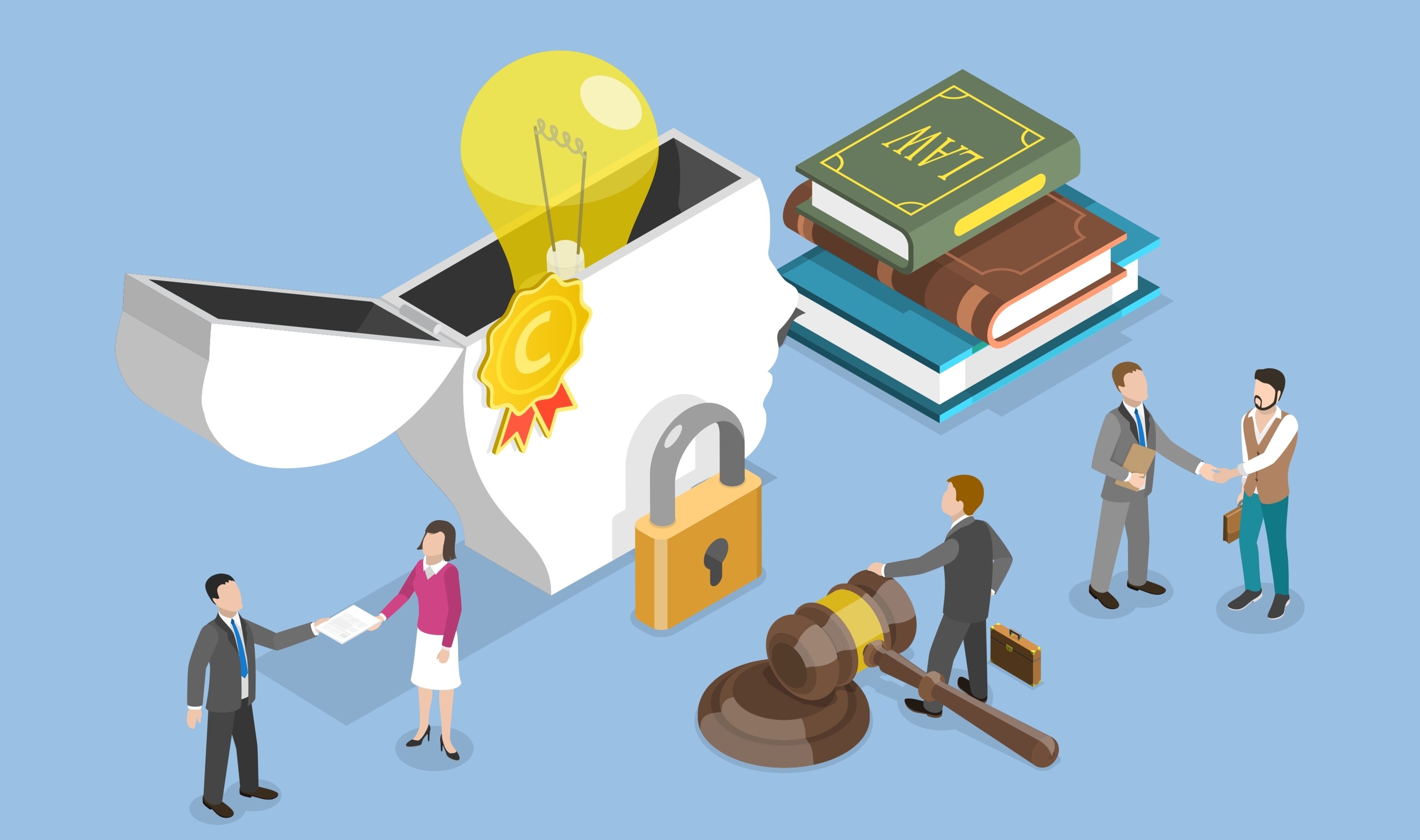

A guide for influencers, Part 2: Minding the intellectual property of others
September 10, 2025
Categories:
Beitragsdatum:
10. September 2025 - 12:18
Picture this: on a sunny morning, you peek into your mailbox (the real one, not your emails) and find a pretty envelope. As you reach for it with childish excitement, you ask yourself who had the lovely idea to send you a postcard from their summer vacation. Then you open it and realise it is a cease-and-desist letter from a lawyer. It turns out that you keep using their client’s songs in your Tik-Tok videos without authorization and they want you to stop “infringing their copyright”. Your disappointment is immeasurable, and your day is ruined. And your bank account potentially as well, since they also demand a hefty payment. If you are an influencer and would like to avoid this type of situation, this article is for you.
- Be aware of the dangers of intellectual property infringement
What is “IP right infringement”?
In the context of IP, “infringement” refers to the use of another person’s IP rights without being duly authorized to use these rights. Since IP rights are exclusive, one needs to either get permission from the IP right owner to use it for a certain amount of time (licence agreement) or obtain property of the IP right from its owner (purchase agreement). To learn more about the most important IP rights (trademarks, designs and copyright), please refer to Part 1 of our guide for influencers (https://lexdellmeier.com/en/blog/guide-influencers-part-1-protecting-your-own-intellectual-property).
What do you risk in case of infringement?
IP rights are geographically limited to individual countries or regions, whose laws may provide for different sanctions. But overall, even in good faith, an influencer promoting fakes or using IP rights without due authorisation from their owners risks:
- Court orders prohibiting further unlawful use of the IP right (so-called “injunctions”)
- Payment of damages and legal fees
- For extreme cases: criminal charges (payment of fines, imprisonment for several years)
- Do your research before posting: look for the existence of third party rights
Trademarks and designs:
- Before dropping names or showing logos in a post, ask yourself whether others have applied for trademarks or designs for the same;
- Worldwide databases such as TMView (for trademarks: https://www.tmdn.org/tmview/#/tmview) and the WIPO Global Database (for designs: https://designdb.wipo.int/designdb/en/) contain information on most registered rights and are accessible free of charge: run a brief search to see whether third party rights may be a problem;
- If you find results that worry you: inform the right owner of your intention and ask for their permission to use the right (in writing), or seek the legal opinion of a professional attorney to lift any doubts you may have regarding a sign’s availability.
Copyrights:
- Copyrights are obtained automatically and not registered (at least in most countries), so the only helpful databases will be those that list works that have fallen within the public domain or works that are shared under open licences (such as Europeana: https://www.europeana.eu): this content will be safe to use;
- Ask yourself whether the use you want to make of someone else's work falls within a copyright exception: for instance, in the EU, use of copyrighted content is allowed for the purpose of parody, or quotation for criticism or review. In such cases: do not forget to mention the source and author in your post (otherwise the exception may not apply)!;
- In establishing whether the work is not free to use and/or your post would benefit from a copyright exception, do not hesitate to ask for the opinion of a legal practitioner;
- Once you are certain that the post you are about to make would be infringing copyright, either contact the owner to obtain their authorisation, or find another idea.
- Recommendation: Legal advice upfront
In general, it makes sense to invest some time and money into proper legal advice BEFORE you start a career as a (professional) influencer. Intellectual property rights and the assessment of the risk they may pose are tricky. Therefore, it is good to have a guideline and know some “ground rules” before posting, advertising etc.
For all questions you may have on this topic, please contact our dedicated colleague Pierre Gerber at p.gerber@lexdellmeier.com and info@lexdellmeier.com and we will arrange a 20-minute Teams call to discuss your specific questions or concerns. A first contact and overall input is generally free of charge.
Related
- "Neuschwanstein" is not a trademark!
- 1 December 2017: Madrid Monitor takes its place as the one and only tool for tracking international trademarks
- 1 January 2020 - Changes in Classifications - Trademarks, Designs, Patents and Utility Models
- 100th Anniversary of Bavaria (Germany) - A glance at trademarks, start-ups, innovation & events
- 10th Anniversary Edition - 10 Things to Know about LexDellmeier - Past, Present & Future
- 14 June 2013: Munich Patent Law Conference - Calculating Damages in Patent Infringement Cases
- 15 Top Brands - Interactive Brand Rating - Years 2000 - 2018
- 15 Years LexDellmeier - 2024 New Year Wishes
- 2014: Statistics for Community Trademarks
- 2024 World IP Day - Building Our Common Future with Innovation and Creativity